
Stainless Steel Nonstick Cookware Set: Buyer's Guide
The modern kitchen demands cookware that delivers both professional performance and everyday convenience. A stainless steel nonstick cookware set bridges the gap between traditional stainless steel's legendary durability and the effortless food release of nonstick surfaces. This hybrid approach has transformed how home cooks approach everything from delicate fish fillets to caramelized vegetables, offering the best attributes of two distinct cooking technologies in one comprehensive package.
Understanding the Hybrid Construction
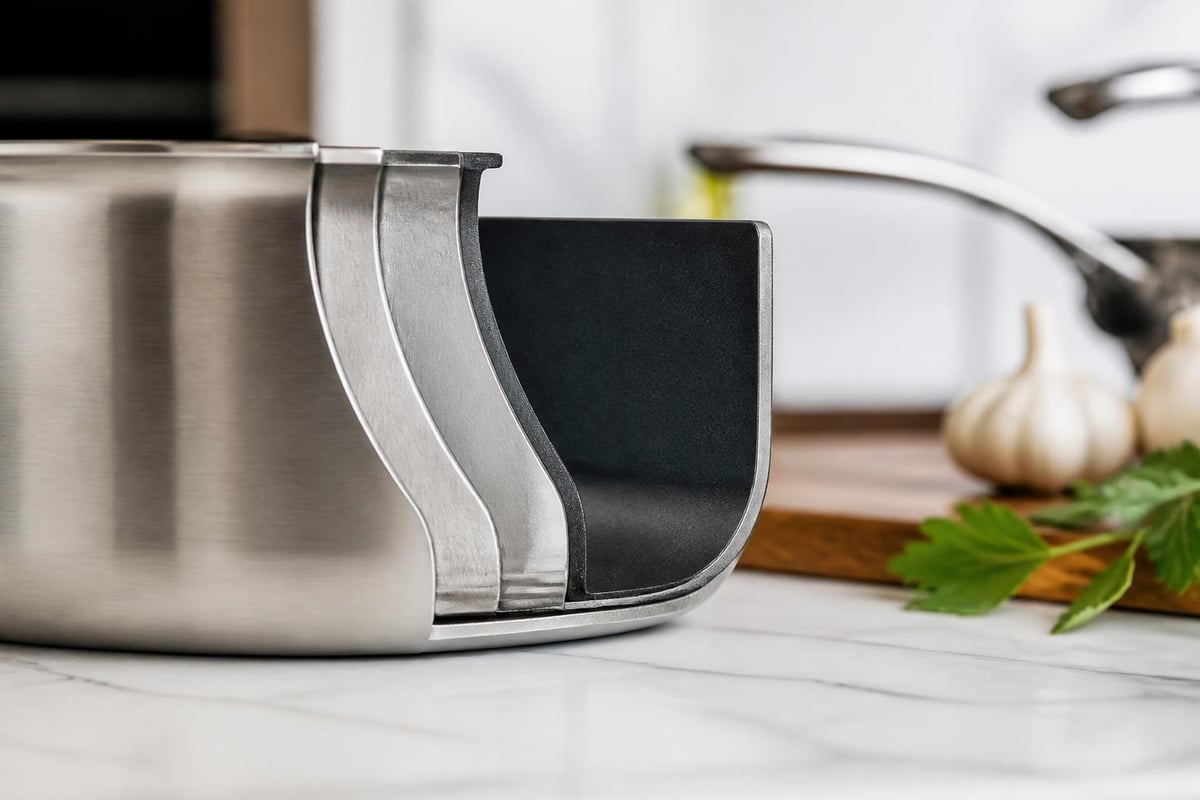
The engineering behind a quality stainless steel nonstick cookware set involves multiple layers of materials working in harmony. The outer stainless steel shell provides structural integrity, while the interior nonstick coating handles the cooking surface.
Material Layer Breakdown
Most premium sets feature three or more distinct layers:
- Exterior stainless steel: Provides durability, scratch resistance, and aesthetic appeal
- Aluminum or copper core: Ensures even heat distribution across the cooking surface
- Interior nonstick coating: Delivers food release properties and easy cleanup
- Reinforcement layers: Additional bonding materials that prevent delamination
The thickness of each layer directly impacts performance. Thicker gauge stainless steel resists warping on high heat, while substantial core metals eliminate hot spots that can burn food.
Why Stainless Steel Matters for the Outer Shell
Stainless steel's chromium content creates a passive oxide layer that resists corrosion and staining. According to research on metal leaching during cooking, quality stainless steel cookware maintains its integrity even under acidic cooking conditions. The 18/10 designation (18% chromium, 10% nickel) represents the gold standard for cookware-grade stainless steel.
This exterior layer also enables compatibility across all cooktop types, including induction ranges that require magnetic properties. The magnetic stainless steel base converts electromagnetic energy into heat, making these sets remarkably versatile.
Key Features to Evaluate Before Purchase
Shopping for a stainless steel nonstick cookware set requires understanding which specifications actually matter for your cooking style and kitchen setup.
Essential Set Components
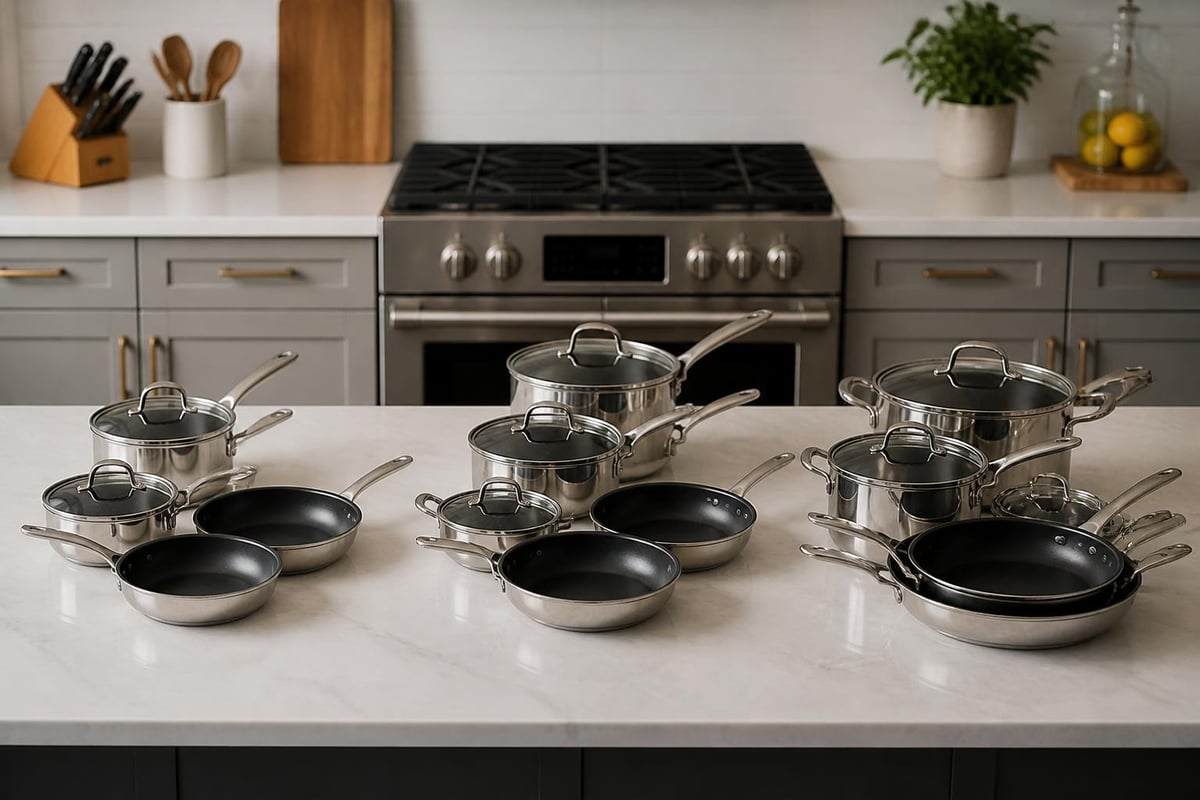
Complete sets typically include:
- 8-inch frying pan - Perfect for single servings and eggs
- 10-inch or 12-inch frying pan - Handles most stovetop tasks
- 1-2 quart saucepan - Ideal for sauces and small portions
- 3-quart saucepan - Versatile medium-capacity pot
- 8-quart stockpot - Essential for soups, pasta, and batch cooking
- Lids - Tempered glass or stainless steel options
Premium sets may add sauté pans, specialty pieces, or steamer inserts. Evaluate whether you'll genuinely use each piece before paying for a larger collection.
Handle Design and Riveting
The connection between handle and pan determines long-term usability. Look for these characteristics:
Riveted handles provide superior strength compared to welded attachments. Triple-rivet construction distributes stress across multiple points, reducing the risk of loosening over time.
Stay-cool technology incorporates hollow or insulated handles that remain comfortable during stovetop cooking. Some manufacturers use silicone wrapping for additional heat protection.
Ergonomic angles reduce wrist strain during tossing and flipping. Test the grip if possible; handles should feel balanced when the pan contains food.
| Handle Type | Heat Resistance | Durability | Oven-Safe Temp |
|---|---|---|---|
| Stainless steel | Excellent | Very high | 500°F+ |
| Silicone-wrapped | Good | High | 350-400°F |
| Bakelite | Moderate | Moderate | Not oven-safe |
Nonstick Coating Technologies Explained
The interior surface of your stainless steel nonstick cookware set determines cooking performance and maintenance requirements. Modern coatings have evolved far beyond traditional PTFE formulations.
PTFE vs. Ceramic vs. Hard-Anodized Options
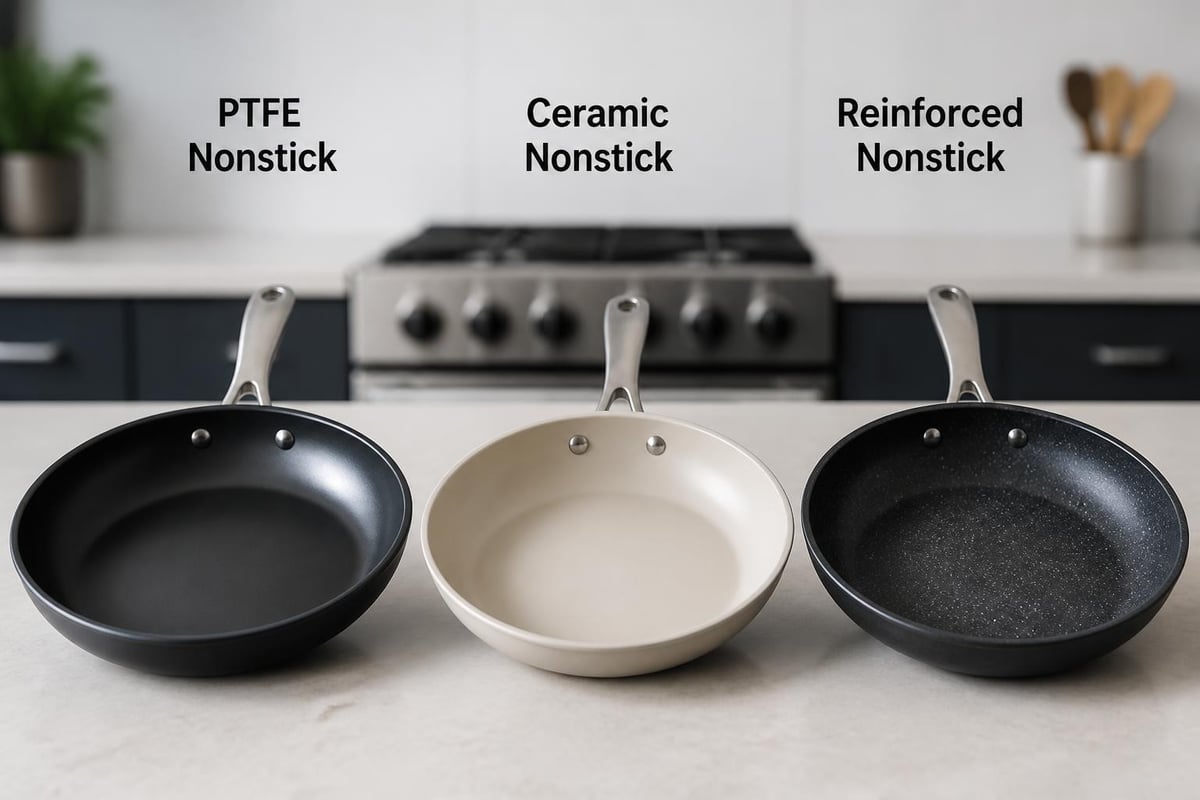
PTFE-based coatings (often called Teflon) offer superior nonstick properties and longevity when properly cared for. Third and fourth-generation PTFE coatings resist scratching and can withstand metal utensils, though manufacturers still recommend silicone or wood.
Ceramic coatings provide a PTFE-free alternative using sol-gel technology. These coatings perform well initially but may lose nonstick properties faster than PTFE, typically within 1-2 years of regular use.
Hard-anodized aluminum with nonstick coating combines durability with performance. The anodized surface creates a harder-than-steel base layer beneath the nonstick coating, extending the coating's lifespan.
Reinforcement Particles and Coating Durability
Premium nonstick surfaces incorporate titanium, diamond, or stone particles into the coating matrix. These microscopic reinforcements:
- Increase scratch resistance by 300-500% compared to standard coatings
- Extend the functional lifespan to 5-7 years with proper care
- Enable higher temperature thresholds (up to 500°F vs. 350°F for basic PTFE)
- Maintain nonstick properties even with minor surface wear
The trade-off involves slightly rougher texture compared to ultra-smooth basic coatings, though this difference is imperceptible during normal cooking.
Heat Distribution and Cooking Performance
Even heating separates professional-grade cookware from budget alternatives. The core construction of your stainless steel nonstick cookware set determines how evenly energy transfers from burner to food.
The Role of Multi-Ply Construction
Single-layer pans create hot spots directly above the flame or heating element. Multi-ply construction solves this through strategic metal layering:
Three-ply (tri-ply) cookware sandwiches aluminum or copper between two stainless steel layers. This represents the minimum standard for quality performance.
Five-ply construction adds additional layers for enhanced heat retention and distribution. The extra mass takes longer to heat but maintains temperature better when adding cold ingredients.
Seven-ply options offer diminishing returns for most home cooks. The added weight can make large pots cumbersome, and the performance gain over five-ply is minimal for typical cooking tasks.
Responsiveness vs. Heat Retention
Different cooking tasks require different thermal properties. According to independent cookware testing, the ideal core material depends on your cooking style:
- Copper cores heat and cool rapidly, offering precise temperature control for delicate sauces
- Aluminum cores provide excellent heat spread at moderate weight and cost
- Stainless steel cores retain heat longest but respond slowly to temperature changes
Most manufacturers use aluminum cores as the best balance between performance, weight, and price point.
Maintenance Requirements and Longevity
Proper care extends the functional life of your stainless steel nonstick cookware set from a few years to potentially a decade or more.
Daily Cleaning Best Practices
Hand washing preserves nonstick coatings better than dishwasher cycles, despite many manufacturers claiming dishwasher-safe construction. The harsh detergents and high heat accelerate coating degradation.
Follow this cleaning sequence:
- Allow pans to cool completely before washing
- Use warm water and mild dish soap with a soft sponge
- Avoid abrasive pads or powdered cleansers on nonstick surfaces
- Dry thoroughly to prevent water spots on stainless steel exteriors
- Store with pan protectors between stacked pieces
Addressing Exterior Stainless Steel Maintenance
The stainless steel exterior requires different care than the nonstick interior:
- Remove heat discoloration with Bar Keeper's Friend or similar oxalic acid cleaners
- Polish with stainless steel cleaner to restore luster
- Clean stuck-on residue with baking soda paste before it carbonizes
- Avoid chlorine bleach, which can pit and corrode stainless steel
| Cleaning Challenge | Recommended Solution | Avoid Using |
|---|---|---|
| Heat tint (rainbow) | Bar Keeper's Friend | Abrasive pads |
| Water spots | White vinegar solution | Chlorine bleach |
| Stuck food | Baking soda paste | Metal scrapers |
| Dull finish | Stainless steel polish | Harsh degreasers |
Health and Safety Considerations
Modern nonstick cookware has addressed many historical concerns through improved manufacturing processes and materials selection.
PFOA and PTFE Safety Updates
PFOA (perfluorooctanoic acid), once used in PTFE coating production, has been phased out by all major manufacturers since 2013. Contemporary PTFE coatings are PFOA-free and considered safe by regulatory agencies when used as directed.
Temperature limitations remain critical. Heating empty nonstick pans above 500°F can degrade coatings and release fumes. Always add cooking fat or food before applying heat.
Metal Leaching from Stainless Steel
Quality stainless steel releases negligible amounts of nickel and chromium during normal cooking. The stainless steel exterior of your cookware set contacts food minimally since the nonstick interior handles cooking duties. For individuals with nickel sensitivities, this hybrid construction provides an additional safety barrier.
Price Points and Value Assessment
Stainless steel nonstick cookware sets span a wide price range, from under $100 to over $500 for premium collections.
What Drives Cost Differences
Budget sets ($80-$150) typically feature:
- Thinner gauge metals that may warp
- Basic single or double-layer nonstick coatings
- Fewer pieces or smaller pan sizes
- Limited warranty coverage (1-2 years)
Mid-range sets ($200-$350) offer:
- Three-ply construction with aluminum cores
- Reinforced nonstick coatings with 3-5 year longevity
- Comprehensive piece selection (10-12 items)
- Oven-safe capabilities up to 400°F
- Extended warranties (5-10 years)
Premium sets ($400-$600+) deliver:
- Five-ply construction with copper cores
- Diamond or titanium-reinforced coatings
- Professional-grade handles and lid fitment
- Lifetime warranties on construction
- Maximum oven-safe ratings (500°F+)
According to comprehensive cookware testing, mid-range sets often provide the best value proposition for home cooks. The performance gap between mid-range and premium narrows considerably unless you're cooking professionally.
Cost Per Use Calculation
Evaluate long-term value by dividing the initial investment by expected years of use. A $300 set lasting seven years costs roughly $43 annually, while a $120 set requiring replacement every two years averages $60 yearly.
Factor in replacement costs for individual pieces if you frequently use specific pans. Some manufacturers sell open stock items, enabling targeted replacement without buying another complete set.
Induction Compatibility and Cooktop Considerations
Modern kitchens increasingly feature induction cooktops, which require magnetic cookware bases to function. Most stainless steel nonstick cookware sets include magnetic stainless steel bases specifically for induction compatibility.
Testing Magnetic Properties
Before purchasing, verify induction compatibility by checking if a magnet adheres firmly to the pan bottom. Weak magnetic attraction indicates insufficient ferromagnetic content for optimal induction performance.
Gas cooktops work with any cookware but benefit from tri-ply construction that spreads concentrated flame heat. The stainless steel exterior resists flame discoloration better than bare aluminum.
Electric coil and smooth-top ranges require flat bottoms for maximum surface contact. Check for warping by placing pans on a level surface; any rocking indicates poor contact that reduces heating efficiency.
Set Composition Strategy
Rather than defaulting to the largest set available, consider which pieces match your actual cooking patterns.
Essential vs. Specialty Pieces
Most home cooks use 3-4 pieces regularly:
- One large frying pan (10-12 inch)
- One medium saucepan (2-3 quart)
- One large pot (6-8 quart)
- Corresponding lids
Specialty additions like double boilers, grill pans, or steamer inserts add cost without proportional value unless you use them weekly. Consider buying a smaller core set and adding open stock pieces as needs emerge.
Lid Material Considerations
Tempered glass lids enable visual monitoring without releasing heat and moisture. Look for:
- Steam vents to prevent pressure buildup
- Metal rim reinforcement to prevent chipping
- Oven-safe ratings matching the pan bodies
Stainless steel lids withstand higher temperatures and resist breakage but eliminate visibility. They're preferable for high-heat oven use or when appearance matters less than durability.
Storage and Organization Tips
Maximizing cabinet space while protecting your investment requires thoughtful organization.
Preventing Coating Damage During Storage
Pan protectors (felt or silicone pads) prevent nonstick surfaces from contacting other cookware. Place one between each stacked piece.
Hanging storage eliminates stacking entirely. Pot racks or pegboards keep pans accessible while preventing surface contact. This works especially well for frequently used pieces.
Nest carefully when stacking is unavoidable. Ensure handles align to prevent scratching and place heavier pieces on bottom. Never exceed 4-5 pieces in a single stack.
Brand Reputation and Warranty Coverage
Manufacturer backing provides peace of mind and recourse if defects emerge.
Warranty Terms to Examine
Limited lifetime warranties often exclude nonstick coating degradation, covering only structural defects like warping or handle separation. Read the fine print to understand what "lifetime" actually means.
Coating-specific coverage (typically 1-5 years) acknowledges that nonstick surfaces gradually degrade. Longer coating warranties suggest manufacturer confidence in durability.
Pro-rated replacements reduce replacement value annually. A 10-year pro-rated warranty might offer 50% value after five years, diminishing to 10% by year ten.
Customer service responsiveness matters as much as warranty length. Research whether the manufacturer handles claims efficiently or creates obstacles to replacement.
A well-chosen stainless steel nonstick cookware set transforms daily cooking from a chore into an efficient, enjoyable process. By understanding construction details, coating technologies, and maintenance requirements, you can select pieces that deliver years of reliable performance while fitting your budget and cooking style. Kitchenovaplus offers carefully curated cookware selections designed to match real-world cooking needs, with expert guidance to help you find the perfect set for your kitchen. Explore our collection today to discover durable, high-performing cookware that makes every meal easier.
Also in NewsWhether you're looking for practical advice

Professional Cookware: The Complete Guide for 2026

Enamel Cookware: Safety, Performance & Buying Guide

Jamie Oliver Cookware: Quality, Features & Value in 2026
Follow
Sign up to get the latest on sales, new releases and more …
© 2026 Kitchenovaplus.
Powered by Shopify


