
Red Cookware: Style, Performance & Buying Guide 2026
Red cookware has become a defining element in contemporary kitchen design, combining striking visual appeal with serious cooking performance. Whether you're outfitting a new kitchen or upgrading worn pieces, the bold statement of crimson pots and pans creates an inviting atmosphere while delivering the functionality professional and home cooks demand. The popularity of red cookware extends beyond simple aesthetics, as manufacturers have invested heavily in developing high-performance materials and coatings that justify the premium many of these pieces command in today's market.
Why Red Cookware Dominates Modern Kitchens
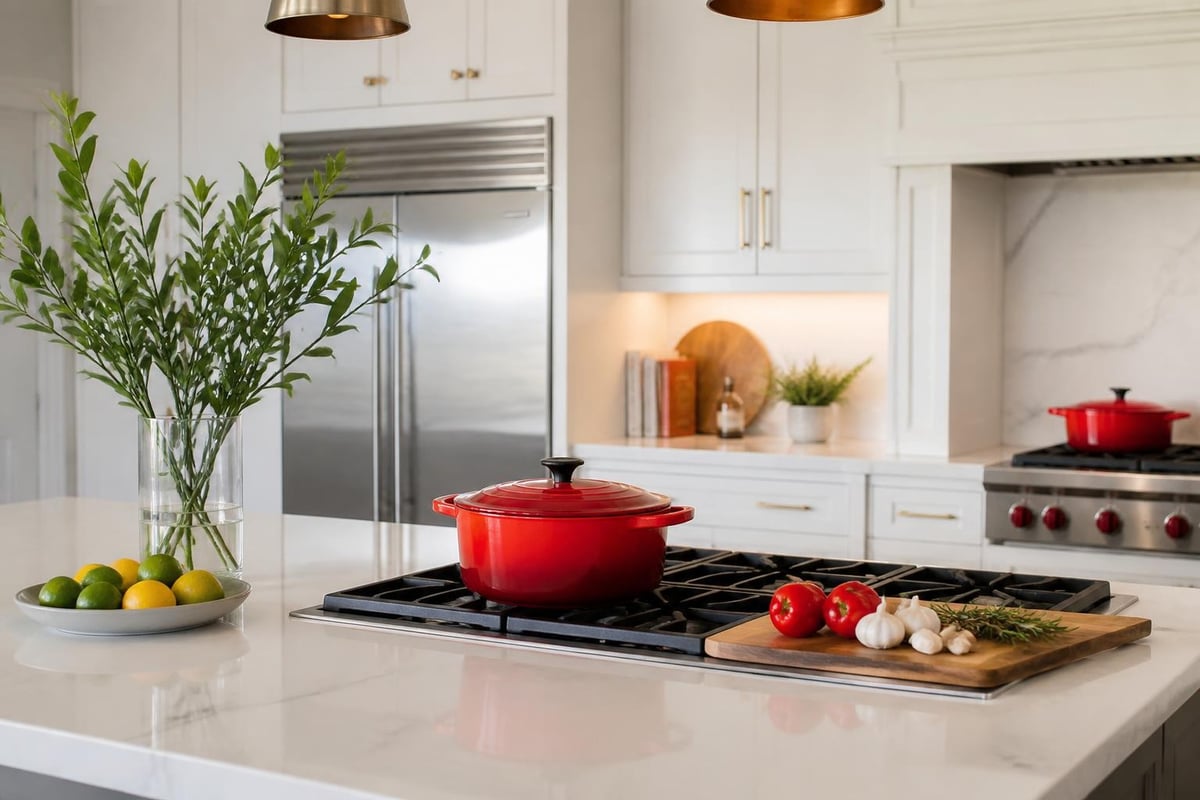
The dominance of red cookware in today's culinary landscape stems from a perfect intersection of design psychology and practical performance. Red naturally draws the eye and creates focal points in kitchen spaces, transforming functional cooking tools into design elements that enhance overall décor. Many homeowners now display their cookware openly on pot racks, stovetops, and open shelving, making the visual impact of each piece far more important than in previous decades.
Beyond aesthetics, the materials commonly used for red cookware deliver exceptional cooking results. Enameled cast iron, which accounts for the majority of premium red cookware, provides unmatched heat retention and even temperature distribution. This combination allows home cooks to achieve restaurant-quality searing, braising, and slow-cooking results that would be difficult with lighter-weight alternatives.
The Psychology of Color in Kitchen Design
Color psychology research demonstrates that red stimulates appetite and creates energizing environments. Professional kitchen designers frequently incorporate red accents to make cooking spaces feel more dynamic and inviting. Red cookware serves this purpose while remaining completely functional, unlike purely decorative elements that occupy valuable space.
The warmth associated with red tones complements natural wood cabinetry, stainless steel appliances, and neutral countertops. This versatility explains why red cookware remains popular across diverse kitchen styles, from traditional country kitchens to sleek modern designs.
Material Composition and Manufacturing Standards
Understanding the construction of red cookware helps buyers make informed decisions about durability, safety, and cooking performance. The majority of high-quality red cookware features an enamel coating applied over a base material, most commonly cast iron or carbon steel.
Enamel Coating Technology
Porcelain enamel coating provides the vibrant red finish on premium cookware while offering several functional advantages. The coating creates a non-reactive cooking surface that won't leach flavors or interact with acidic ingredients like tomatoes or wine. This non-reactive property makes enameled cookware ideal for preparing a broader range of dishes than bare cast iron.
Manufacturing processes for enamel coatings have evolved significantly, with leading brands applying multiple layers at temperatures exceeding 1400°F (760°C). This high-temperature fusion creates a glass-like surface that resists chipping, staining, and scratching under normal use. The acid resistance of porcelain enamel finishes undergoes rigorous testing to ensure longevity and safety standards are met.
| Material Base | Heat Retention | Weight | Price Range | Best Uses |
|---|---|---|---|---|
| Cast Iron | Excellent | Heavy | $$$ | Braising, baking, searing |
| Carbon Steel | Very Good | Medium | $$ | Sautéing, stir-frying |
| Aluminum | Good | Light | $ | Quick cooking, everyday use |
| Stainless Steel | Moderate | Medium | $$-$$$ | All-purpose cooking |
Safety and Compliance Standards
Modern red cookware from reputable manufacturers meets stringent safety requirements established by international standards organizations. European standards, including EN 12983-1:2023 for domestic cookware, outline requirements for thermal performance, mechanical strength, and chemical composition. These standards ensure that enamel coatings remain stable during cooking and don't release harmful substances.
When selecting red cookware, buyers should verify that products comply with relevant food-contact regulations. Premium brands typically provide documentation confirming their coatings contain no lead, cadmium, or other toxic heavy metals. The Consumer Reports guide to choosing safer cookware offers independent testing results and recommendations for health-conscious consumers.
Performance Characteristics and Cooking Applications
Red cookware excels in specific cooking techniques that leverage the thermal properties of its underlying materials. Cast iron red cookware, in particular, transforms challenging cooking tasks into achievable everyday techniques.
Heat Distribution and Retention
The thick walls and base of quality red cookware distribute heat evenly across the entire cooking surface, eliminating hot spots that can cause uneven browning or burning. This characteristic proves especially valuable when:
- Searing meat at high temperatures
- Maintaining steady heat for slow braises
- Baking bread or desserts in Dutch ovens
- Reducing sauces to perfect consistency
Once heated, red cookware made from cast iron retains temperature remarkably well. A preheated Dutch oven maintains consistent heat even when cold ingredients are added, allowing proper browning and flavor development. This thermal mass also means the cookware stays hot during serving, keeping dishes warm at the table.
Versatility Across Cooking Methods
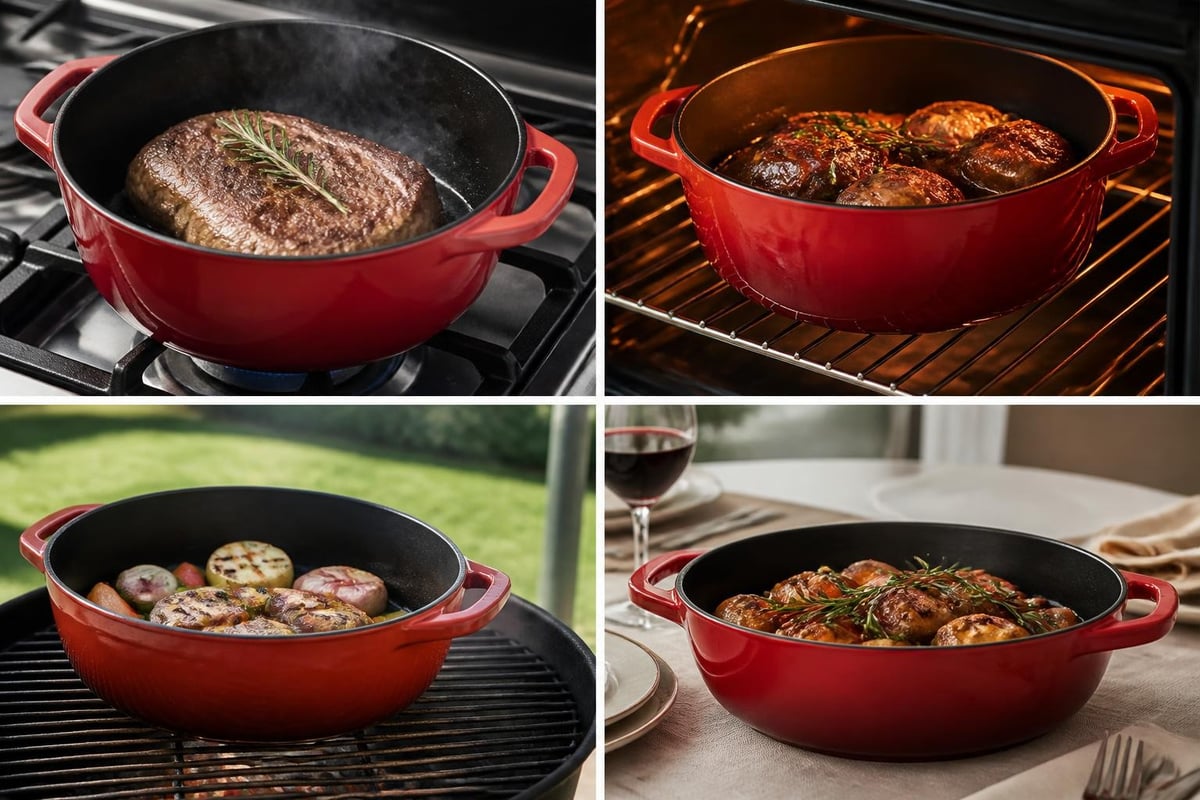
Modern red cookware adapts to virtually every cooking method:
- Stovetop cooking: Compatible with gas, electric, and induction cooktops (when manufactured with magnetic materials)
- Oven use: Most red cookware withstands oven temperatures up to 500°F (260°C) or higher
- Outdoor cooking: Suitable for campfire and grill use when handles and lids are properly rated
- Serving: Attractive enough to move directly from oven to table
Essential Red Cookware Pieces for Every Kitchen
Building a functional red cookware collection requires strategic selection based on cooking habits and kitchen needs. Rather than purchasing complete sets that may include seldom-used pieces, focus on versatile essentials.
The Foundation: Dutch Oven
A 5.5 to 7-quart red Dutch oven represents the single most versatile piece of cookware for most households. This workhorse handles:
- Soups and stews for family meals
- Braised meats and vegetables
- Artisan bread baking
- Large-batch pasta dishes
- One-pot rice and grain preparations
The heavy lid creates a self-basting environment that keeps moisture circulating, resulting in tender, flavorful results. Many home cooks find their red Dutch oven becomes their most-used piece within weeks of purchase.
Skillets and Frying Pans
Red skillets in 10-inch and 12-inch sizes complement the Dutch oven by handling different tasks:
| Size | Capacity | Ideal Uses | Servings |
|---|---|---|---|
| 10-inch | 3-4 cups | Individual portions, eggs, small sautés | 2-3 |
| 12-inch | 5-6 cups | Family meals, stir-fries, pan-roasting | 4-6 |
The sloped sides of skillets facilitate tossing and stirring, while the large surface area promotes evaporation for proper browning and sauce reduction.
Specialty Pieces Worth Considering
After establishing the foundation, specialty red cookware pieces address specific cooking needs:
- Grill pans: Raised ridges create sear marks and allow fat drainage
- Braiser pans: Wide, shallow design perfect for dishes requiring both browning and liquid cooking
- Sauce pans: Smaller red sauce pans (2-3 quart) for heating sauces, warming soup, or cooking grains
- Roasting pans: Large oval or rectangular pieces for poultry and large cuts of meat
Care, Maintenance, and Longevity
Proper care extends the lifespan of red cookware indefinitely, making it a genuine investment that can be passed down through generations. The enamel coating requires different maintenance than bare cast iron but remains relatively low-maintenance compared to other cookware types.
Daily Cleaning Best Practices
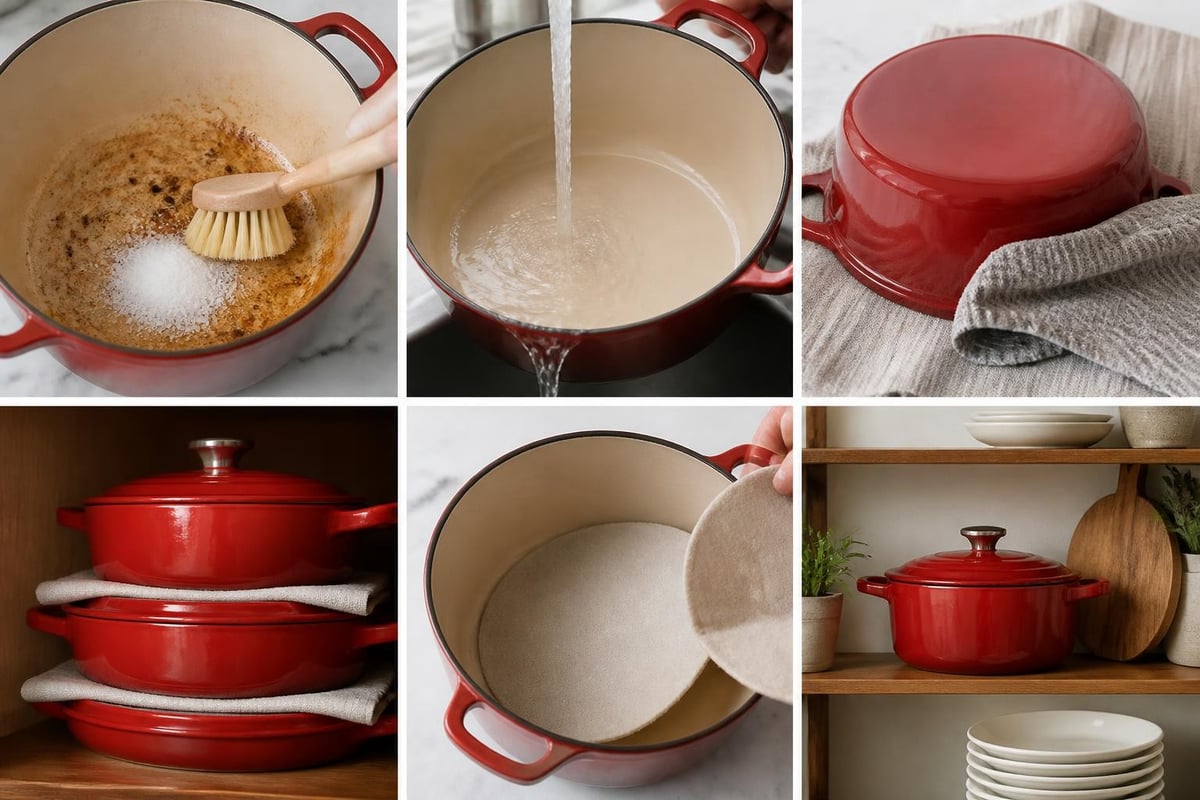
Most red cookware allows dishwasher cleaning, though hand washing preserves the finish longer. For daily cleaning:
- Allow cookware to cool before washing to prevent thermal shock
- Use warm soapy water and soft sponges or cloths
- Avoid abrasive cleaners or steel wool that can damage enamel
- Dry thoroughly to prevent water spots on exterior surfaces
Stuck-on food responds well to soaking with warm water and a few drops of dish soap. For stubborn residue, a paste of baking soda and water gently lifts food without scratching the enamel surface.
Preventing and Addressing Damage
While high-quality enamel resists chipping, certain precautions minimize risk:
- Never heat empty red cookware, which can damage the enamel coating
- Avoid dramatic temperature changes (like cold water on hot cookware)
- Use silicone, wood, or plastic utensils rather than metal
- Place protective padding between stacked pieces during storage
- Lift cookware rather than sliding it across stovetops or counters
Minor chips in the enamel don't necessarily require replacement if they occur on exterior surfaces. Interior chips warrant evaluation, as exposed base metal may react with acidic foods or develop rust.
Long-Term Performance Expectations
Premium red cookware develops character over years of use while maintaining functionality. Light surface staining from high-heat cooking or certain foods is normal and doesn't impact performance. Many cooks view these marks as badges of honor that tell the story of countless family meals.
The carbon footprint of cast iron production and lifecycle considerations favor durable cookware that lasts decades over disposable alternatives requiring frequent replacement. This sustainability advantage adds to the value proposition of investing in quality red cookware.
Selecting Quality Red Cookware: What to Look For
The market offers red cookware at every price point, from budget-friendly options to heirloom-quality pieces commanding premium prices. Understanding quality indicators helps buyers navigate these choices and select pieces that meet their specific needs.
Construction Quality Markers
Examine these details when evaluating red cookware:
- Weight: Heavier pieces generally indicate thicker base materials that distribute heat more evenly
- Enamel finish: Look for smooth, even coating without bubbles, thin spots, or rough edges
- Handle attachment: Handles should attach securely with reinforcement, not simply spot-welded
- Lid fit: Quality lids seat snugly without excessive wobbling or gaps
- Interior color: Light-colored interiors show browning better than dark surfaces
Brand Reputation and Warranty
Established cookware manufacturers typically offer generous warranties reflecting confidence in their products. Lifetime warranties on enamel coating against defects provide peace of mind, though specific coverage varies by brand. Research customer service reputation, as warranty claims require responsive support to be meaningful.
Price-to-Performance Ratio
Red cookware pricing varies dramatically based on manufacturing location, brand heritage, and materials quality. Consider these factors when evaluating cost:
| Price Tier | Typical Range | Expected Lifespan | Best For |
|---|---|---|---|
| Budget | $30-$75 | 3-5 years | Occasional cooks, first apartments |
| Mid-Range | $75-$200 | 10-15 years | Regular home cooking |
| Premium | $200-$500+ | 25+ years (lifetime) | Serious cooks, heirloom pieces |
The most expensive option isn't always necessary, but extreme budget pieces often compromise on enamel quality, leading to chipping and staining. Mid-range red cookware from reputable brands typically delivers the best value for regular home use.
Styling Your Kitchen With Red Cookware
Beyond cooking performance, red cookware serves as a design element that influences overall kitchen aesthetics. Strategic display and coordination with other elements maximizes visual impact.
Display Strategies
Open storage solutions showcase red cookware while keeping it accessible:
- Pot racks: Ceiling or wall-mounted racks turn cookware into sculptural elements
- Open shelving: Displaying red pieces on open shelves creates bold color blocks
- Stovetop storage: Keeping frequently used pieces on the stove adds warmth and convenience
- Glass-front cabinets: Partial visibility behind glass provides protection while showing color
Coordinating With Kitchen Color Schemes
Red cookware complements diverse color palettes:
- Neutral kitchens: Red provides energizing pops against white, gray, or beige
- Wood tones: Natural wood cabinetry warms further with red accents
- Black and white: Red adds traditional charm or modern boldness depending on style
- Blue schemes: Red and blue create classic, vibrant combinations
Consider limiting red to cookware and small accessories in predominantly neutral kitchens, or embrace a bolder red-themed design with matching small appliances, textiles, and décor.
Common Misconceptions About Red Cookware
Several myths about red cookware persist despite advances in materials and manufacturing. Understanding facts versus fiction helps buyers make confident decisions.
Myth: Color Affects Cooking Performance
The red exterior enamel coating has no impact on cooking performance compared to other enamel colors. Heat distribution, retention, and cooking results depend entirely on the base material and thickness. A red Dutch oven performs identically to the same model in blue, white, or black.
Myth: Red Cookware Requires Special Stovetops
Quality red cookware works on all stovetop types when properly manufactured. Cast iron and enameled steel pieces function on gas, electric coil, radiant glass, and induction surfaces. Only induction cooking requires magnetic base materials, a characteristic unrelated to color.
Myth: Enamel Coating Weakens Over Time
High-quality enamel coating maintains integrity indefinitely with proper care. The glass-like surface doesn't degrade from normal cooking temperatures or acidic foods. Visible wear typically results from physical damage (chips from impacts) rather than chemical or thermal breakdown.
Making the Investment: When Red Cookware Makes Sense
Red cookware represents a significant investment, particularly for premium pieces. Certain cooking styles and household situations justify this investment more than others.
Ideal Candidates for Red Cookware Investment
Home cooks who benefit most from quality red cookware share certain characteristics:
- Frequent cooking of slow-cooked dishes, braises, and one-pot meals
- Interest in bread baking or other techniques requiring steady heat
- Desire for cookware that enhances kitchen aesthetics
- Willingness to maintain pieces properly for long-term use
- Preference for durable, sustainable products over disposable alternatives
When to Consider Alternatives
Budget-conscious cooks or those with specific needs may find better value in alternatives:
- Limited cooking: Infrequent cooks may not justify premium cookware costs
- Weight concerns: Physical limitations may make heavy cast iron red cookware impractical
- Quick cooking focus: Those primarily doing quick sautés or stir-fries might prefer lighter pans
- Frequent moves: Renters moving regularly may want lighter, less fragile options
The key lies in matching cookware investment to actual cooking habits rather than aspirational ones.
Red cookware combines stunning visual impact with proven cooking performance, making it a worthy investment for passionate home cooks. Whether you're drawn to the bold aesthetics, superior heat retention of enameled cast iron, or the versatility of pieces that transition from stovetop to oven to table, quality red cookware elevates both your cooking results and kitchen design. Kitchenovaplus offers carefully selected red cookware options that balance performance, durability, and value, helping you build a collection that serves your culinary needs for decades to come.
Also in NewsWhether you're looking for practical advice

Professional Cookware: The Complete Guide for 2026

Enamel Cookware: Safety, Performance & Buying Guide

Jamie Oliver Cookware: Quality, Features & Value in 2026
Follow
Sign up to get the latest on sales, new releases and more …
© 2026 Kitchenovaplus.
Powered by Shopify


