
How to Maintain an Odourless Food Waste Bin in Your Australian Kitchen
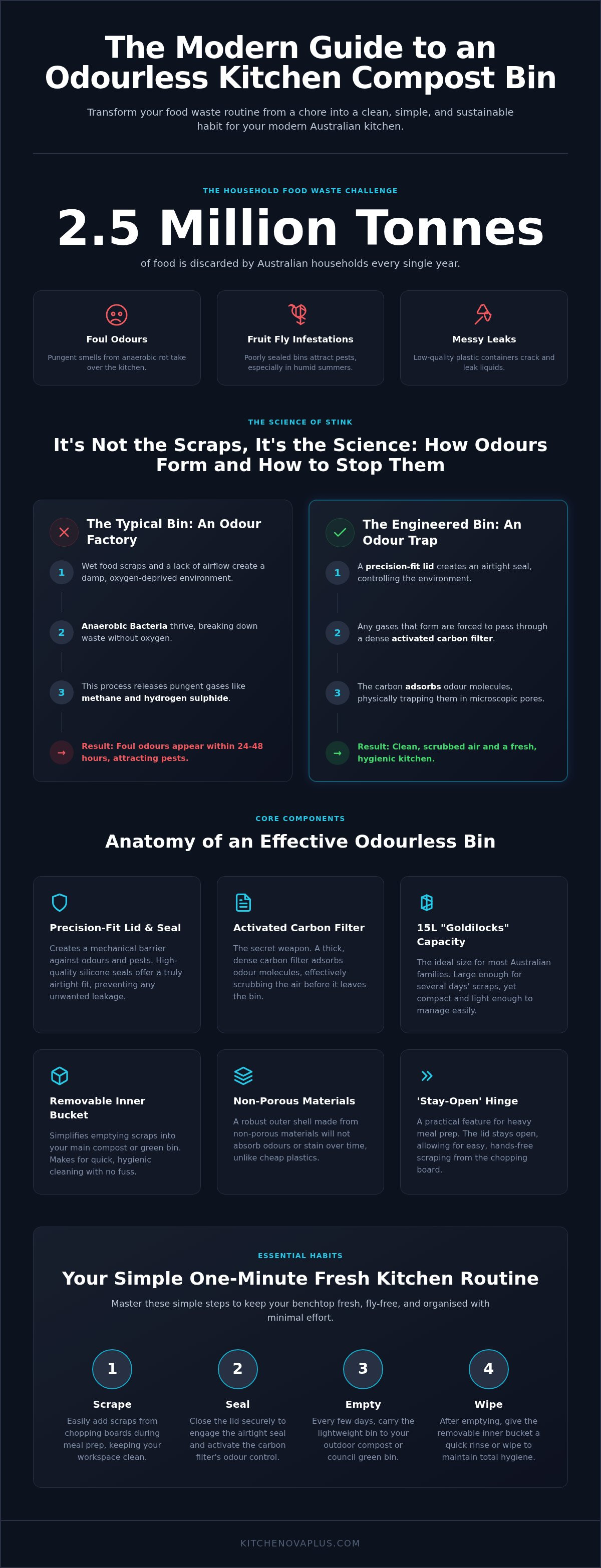
Did you know that Australian households discard approximately 2.5 million tonnes of food waste every single year? It is a confronting statistic that highlights our growing need for better waste management at home, yet many of us feel held back by the practical realities of indoor composting.
If you have ever hesitated to start a scrap bucket because of foul smells wafting through your kitchen during a humid summer, you aren't alone. Dealing with fruit fly infestations and messy leaks from poor quality plastic containers is enough to make anyone feel frustrated. You deserve a solution that supports your environmental values without sacrificing the hygiene or the sleek aesthetic of your modern kitchen.
This article shares the practical secrets to maintaining a truly odorless food waste bin while keeping your benchtop fresh and fly-free. We will show you how a high-capacity system paired with a simple routine taking less than a minute a day can completely streamline your kitchen chores. You will discover how to transition to a more sustainable lifestyle with total peace of mind, ensuring your home remains a clean and inviting space for your family.
Key Takeaways
- Understand the science of decomposition to stop foul smells by prioritising airflow and moisture control in your kitchen.
- Learn how a high-quality seal and carbon filtration create a truly odorless food waste bin that fits your modern aesthetic.
- Discover why a 15L capacity is the ideal "Goldilocks" size for managing family scraps without the heavy lifting.
- Master a simple one-minute routine to keep your benchtop fresh and free from fruit flies, even in the humid Aussie heat.
- Reduce your environmental footprint with confidence by using a system that prioritises both hygiene and sustainable organisation.
Why Kitchen Scraps Smell: The Science of the Odourless Food Waste Bin
Maintaining a fresh kitchen benchtop starts with understanding the hidden biology of rot. Most people assume food scraps just smell because they are old, but the real culprit is a lack of oxygen. When you toss vegetable peelings into a standard bin, you are often creating an environment where air cannot circulate. This triggers a biological shift that turns a simple pile of scraps into a source of domestic friction.
Traditional open-top bins or cheap plastic containers often fail under the pressure of the Australian climate. High temperatures act like a catalyst, speeding up the breakdown of organic matter. In our humid summers, a bin that doesn't breathe becomes a miniature sauna for bacteria. An odorless food waste bin is a system that manages gas exchange while trapping volatile organic compounds, ensuring your kitchen stays pleasant regardless of the temperature outside.
The Role of Anaerobic Bacteria
When oxygen is depleted, anaerobic bacteria thrive. These microbes break down organic material through anaerobic digestion, a process that releases pungent gases like methane and hydrogen sulphide. Moisture is the primary fuel for this stink. Wet scraps like juicy melon rinds, soggy tea bags, or leftover coffee grounds create a damp environment that accelerates the rot.
You will notice the shift quickly. Fresh scraps usually begin to produce foul odours within 24 to 48 hours if they are left in a stagnant, wet environment. By managing moisture and ensuring a small amount of filtered airflow, you can delay this process and keep your kitchen smelling like a home rather than a landfill.
How Carbon Filtration Neutralises Air
The secret to a high-performing odorless food waste bin lies in the chemistry of activated carbon. Unlike sponges that absorb liquid, carbon adsorbs gases. This means odour molecules physically stick to the vast network of microscopic pores inside the filter. It is an incredibly efficient way to scrub the air before it ever reaches your nose.
Quality matters when it comes to filtration. A thick, dense carbon filter is far superior to a thin mesh because it offers a much larger surface area for trapping smells. For this system to work, a snug lid seal is essential. A tight seal creates a pressure barrier that forces any escaping gases to pass through the filter rather than leaking out through the gaps in the lid. This simple mechanical advantage is what separates a professional waste solution from a basic bucket.
Anatomy of an Effective Odourless Food Waste Bin
A high-performing odorless food waste bin is more than just a storage vessel; it is a carefully engineered three-part system. To keep your kitchen fresh, you need a configuration that includes a robust outer shell, a removable inner bucket, and a precision-engineered lid. Each component plays a vital role in preventing the chemical breakdown of scraps from becoming a household nuisance.
Material choice is the foundation of hygiene. Porous plastics often absorb food odours over time, leading to a permanent "bin smell" that lingers even after a thorough wash. Opting for non-porous materials ensures that organic residues cannot penetrate the surface. This durability pairs perfectly with the modern Australian aesthetic. Your waste solution should look like a premium kitchen accessory rather than a piece of industrial hardware, fitting seamlessly into your contemporary benchtop design.
Capacity is another critical factor. A 15L capacity is the "Goldilocks" size for most Australian families. It provides enough space to handle a few days of meal prep without becoming too heavy to carry or taking up excessive space on the floor or under the sink. For those looking to upgrade their setup, the 15L Indoor Kitchen Compost Bin offers this perfect balance of volume and footprint.
Lid Integrity and Seal Quality
The lid is your first line of defence against pests and smells. A precision-fit lid creates a mechanical barrier that prevents fruit flies from detecting the organic matter inside. While many basic bins use a simple friction-fit lid, high-end models often employ silicone seals. These seals create an airtight environment that forces all rising gases through the carbon filter.
Practicality is just as important as the seal. A lid with a "stay-open" hinge is a game-changer during heavy meal prep sessions. It allows you to scrape scraps directly from the chopping board without constantly touching the bin, keeping your hands clean and your workflow efficient. Following basic food safety and storage tips helps you manage what goes into the bin, ensuring you aren't tossing in items that will spoil too rapidly.
Internal Bucket Systems
Hygiene hinges on the ease of cleaning. A removable inner bucket is a non-negotiable feature for any serious indoor composting system. It allows you to empty the contents into your outdoor green bin or FOGO caddy without carrying the entire unit. This design also prevents the dreaded "bin juice" phenomenon, where liquids pool at the bottom of the outer shell. A dedicated internal bucket is easy to rinse in the sink, ensuring that old residues don't build up and create lingering scents.
5 Essential Habits for a Fresh Kitchen Benchtop
Maintaining an odourless food waste bin is a partnership between smart hardware and simple daily habits. Even the best engineering requires a proactive routine to perform at its peak. By adopting a "work smarter, not harder" approach to your kitchen organisation, you can ensure your 15L Indoor Kitchen Compost Bin remains a discreet and fresh addition to your home. Consistency is the foundation of a smell-free kitchen, especially when the Australian sun starts to climb.
While large scale facilities often reference the NSW EPA odour management framework to control emissions, you can apply similar principles of containment and filtration at home. These five habits will help you master the art of indoor composting without the unwanted side effects.
Layering Your Scraps Correctly
Effective moisture management starts with the "Dry on Top" rule. Whenever you add particularly wet scraps, such as melon rinds or used coffee grounds, try to cap them off with dry organic matter. Crushed eggshells, dry bread crusts, or even a small piece of torn cardboard work perfectly as a lid within the bin. This layering technique helps regulate the humidity levels inside your 15L container, preventing the anaerobic conditions that lead to foul smells. You should also avoid pouring liquid waste like soup or juice into the bin, as excess fluid is the primary driver of rapid decomposition.
The 3-Day Emptying Rule
In the Australian climate, waiting a full week to empty your scraps is a recipe for trouble. The 72-hour mark is the ultimate "sweet spot" for maintaining freshness. Emptying your bin every three days ensures that decomposition doesn't reach the stage where gases become overwhelming. The 15L capacity of the 15L Indoor Kitchen Compost Bin is specifically designed to support this frequency for the average family. It holds enough to be practical, yet fills up right at the point when it's time for a refresh. For the best results, empty your bin in the morning. This simple timing prevents food smells from lingering overnight when nocturnal pests are most active.
Filter Maintenance and Replacement
Your carbon filter is the lungs of your waste system, and it eventually reaches a point of saturation. You don't need a calendar to tell you when to change it; a simple "sniff test" will do. If you detect a faint scent while the lid is closed, the filter has likely reached its limit. When replacing the filter, ensure it is seated firmly within the housing to prevent air from bypassing the carbon. It's also a good idea to wipe down the lid area and the filter tracks with a damp cloth during every bag change to remove any trapped dust or organic residue that could harbour bacteria.
The biggest hurdle for many Australians starting an indoor compost journey isn't the effort; it's the fear of uninvited guests. Fruit flies and other "creepy crawlies" are a common frustration, particularly when the mercury rises. Our harsh climate accelerates the life cycle of pests and the breakdown of organic matter, making moisture control a top priority. Achieving a truly odourless food waste bin requires a delicate balance between wet and dry materials to ensure your kitchen remains a hygienic sanctuary.
Deterring Aussie Fruit Flies
Fruit flies are experts at sniffing out fermenting sugars from across the room. The airtight seal of a high-quality bin is your primary defence, acting as a physical barrier that stops these pests before they can land. It's vital that you never leave the lid open for extended periods while cooking. Even a few minutes of exposure during a humid afternoon can be enough for flies to find their way in and start a cycle that is difficult to break.
If you're already seeing a few strays, try placing a small ramekin with a dash of apple cider vinegar and a drop of dish soap near the bin area. This acts as a highly effective distraction trap, drawing flies away from your scraps and into the solution. It is a simple, non-toxic way to keep your benchtop clear without using harsh chemicals around your food preparation zones.
Controlling Condensation and Humidity
Humidity is the enemy of a fresh kitchen. When moisture builds up inside your bin, it creates a swampy environment that fuels anaerobic smells. You can easily combat this with the "newspaper trick." Simply line the bottom of your internal bucket with a few sheets of old newspaper or a brown paper bag. This layer absorbs excess "bin juice" and keeps the base of your bucket dry, making it much easier to clean later.
Placement is equally important for managing the internal climate. You should always store your bin away from direct sunlight. A sunny windowsill might look nice, but the heat will turn your scraps into a steaming mess in hours. Instead, keep it in a cool, shaded spot on the benchtop or inside a ventilated cupboard. During mid-summer, be extra mindful of high-moisture scraps like citrus peels and melon rinds. If you have a large amount of these, consider taking them straight to the outdoor bin or layering them heavily with dry materials to keep the internal environment stable.
Ready to take control of your kitchen waste with a system designed for the Australian lifestyle? You can order the 15L Indoor Kitchen Compost Bin here to start your journey toward a cleaner, more sustainable home today.
Why the KitchenovaPlus 15L Bin is the Ultimate Solution
Choosing the right hardware is the final step in mastering your kitchen workflow. While the science of airflow and the discipline of a three-day routine are essential, they are much easier to maintain when your equipment works with you. The 15L Indoor Kitchen Compost Bin from KitchenovaPlus is engineered specifically to bridge the gap between high-end kitchen design and practical environmental responsibility. It transforms a messy necessity into a streamlined part of your daily life.
By investing in a purpose-built odorless food waste bin, you remove the friction points that often lead to abandoned sustainability goals. You don't have to choose between a clean-smelling home and your commitment to the planet. This system provides a sophisticated tool that makes managing food scraps feel like a natural extension of your cooking process rather than an unhygienic burden.
Designed for the Modern Australian Home
Modern Australian kitchens often feature stone benchtops and sleek, minimalist cabinetry. A cheap, neon-green plastic bucket looks out of place in these curated spaces. Our bin features a Red Dot-inspired design that complements your interior aesthetic rather than clashing with it. It looks like a premium accessory, sitting discreetly on your benchtop or inside a cupboard.
Capacity is where many generic waste solutions fall short. Some retailers suggest a 5L bin is sufficient, but these smaller units overflow far too quickly for a busy family. This leads to frequent, annoying trips to the outside bin and a constant feeling of being behind on chores. The 15L size is our "Goldilocks" solution. It provides the extra volume needed for a few days of meal prep while remaining compact enough for a minimal footprint. Our materials are selected for their long-term durability, ensuring they stand up to the rigours of daily kitchen use without cracking or absorbing stubborn stains.
Our Commitment to Your Sustainable Lifestyle
Transitioning to a zero-waste household should be a simple, rewarding experience. We believe that sustainable living is most successful when it is simplified and aesthetically pleasing. By providing a truly odorless food waste bin, we remove the primary barrier to indoor composting: the fear of foul smells. You gain the peace of mind that comes from knowing you are reducing landfill waste without compromising the hygiene of your home sanctuary.
As a national Australian retailer, we are proud to support your journey with reliable, local service. We handle shipping across the country, ensuring you have the tools you need to organise your kitchen effectively. Elevate your kitchen organisation with our 15L Indoor Bin and discover how the right design can modernise your daily routine.
Modernise Your Kitchen Waste Routine
Managing food scraps shouldn't feel like a chore that compromises your home's hygiene. By understanding the science of decomposition and adopting simple daily habits, you can maintain a perfectly odorless food waste bin even during the peak of an Australian summer. Success lies in the combination of smart hardware and consistent routines, such as the 72-hour emptying rule and effective moisture layering.
The right tools make all the difference in achieving a sustainable lifestyle without the mess. Our 15L Indoor Kitchen Compost Bin offers an advanced carbon filtration system and a generous capacity that means fewer trips to the garden. Its sleek design ensures it looks right at home on your modern stone benchtop while keeping pests at bay. Transitioning to a zero-waste household is a rewarding journey, and it starts with a system that works as hard as you do.
Simplify your kitchen routine with our 15L Indoor Bin today. You'll enjoy the peace of mind that comes from a clean, efficient, and eco-conscious home.
Frequently Asked Questions
How often should I change the carbon filter in my bin?
You should replace the carbon filter every three to six months to maintain peak performance. The exact timing depends on how many high-moisture scraps you process and the ambient humidity in your kitchen. If you notice a faint scent while the lid is closed, it's a clear sign the filter is saturated. Regularly checking the filter ensures your odorless food waste bin continues to trap volatile compounds effectively throughout the year.
Can I put meat and dairy scraps in an indoor food waste bin?
You can include meat and dairy scraps in your bin, but you must empty it more frequently. These items decompose rapidly and produce stronger odours than vegetable peelings. If you follow the 72-hour emptying rule mentioned earlier, small amounts are manageable. However, always check your local council's FOGO guidelines, as some regional composting facilities have specific restrictions on animal products to ensure high-quality compost output.
Do I need to use biodegradable liners with the 15L bin?
Biodegradable or compostable liners are not strictly required, but they make the emptying process much cleaner. If you choose to use them, ensure they meet the Australian Standard AS 4736-2006 for commercial composting or AS 5810 for home use. Using a certified liner prevents messy leaks and makes it easier to transport scraps to your outdoor green bin without needing to scrub the internal bucket after every use.
What is the best way to clean the inner bucket to prevent smells?
The most effective way to clean the inner bucket is with warm, soapy water after every empty. For a deeper clean, a quick rinse with a diluted white vinegar solution will neutralise any lingering acidic smells. Always ensure the bucket is completely dry before placing it back into the outer shell. This prevents trapped moisture from creating the damp, anaerobic conditions that lead to unwanted scents in your kitchen.
Will this bin keep cockroaches and ants away?
Yes, the precision-engineered seal on the 15L Indoor Kitchen Compost Bin is designed to keep cockroaches and ants away. These pests are attracted to the smell of decaying organic matter, so a high-quality seal acts as a vital barrier. By trapping the scent inside and forcing air through the carbon filter, you remove the "scent trail" that usually leads insects directly to your kitchen benchtop or under-sink area.
Is 15L too big for a small apartment kitchen benchtop?
The 15L capacity is specifically designed to offer maximum volume with a minimal benchtop footprint. It fits comfortably in most small apartment kitchens without overcrowding your workspace. Because it is taller rather than wider, it utilises vertical space effectively. This "Goldilocks" size ensures you aren't making daily trips to the outside bin, providing a practical waste solution that doesn't sacrifice valuable preparation area in compact homes.
Can I wash the carbon filters to make them last longer?
No, you cannot wash carbon filters to extend their lifespan. Activated carbon works through adsorption, where odour molecules stick to microscopic pores. Getting the filter wet or using detergents will clog these pores and ruin the material's ability to scrub the air. Once the filter is saturated or becomes damp from internal condensation, it must be replaced with a fresh one to ensure your odorless food waste bin remains effective.
What should I do if my bin starts to develop a slight odour?
If a slight scent develops, start by emptying the bin and giving the inner bucket a thorough wash with soapy water. Check that the carbon filter is seated correctly and isn't damp from condensation. You might also need to wipe down the lid seal to remove any trapped food particles. If the smell persists, it's usually a sign that the filter has reached its capacity and needs a quick replacement.
Also in NewsWhether you're looking for practical advice

Professional Cookware: The Complete Guide for 2026

Enamel Cookware: Safety, Performance & Buying Guide

Jamie Oliver Cookware: Quality, Features & Value in 2026
Follow
Sign up to get the latest on sales, new releases and more …
© 2026 Kitchenovaplus.
Powered by Shopify


