
Cookware Stainless Steel: The Complete 2026 Guide
Stainless steel has dominated professional and home kitchens for decades, and for good reason. This versatile material combines durability, heat performance, and food safety in ways that few other cookware materials can match. Whether you're outfitting a new kitchen or upgrading worn pots and pans, understanding what makes quality cookware stainless steel exceptional will help you make investments that last for generations.
Understanding Stainless Steel Cookware Composition
The term "stainless steel" actually encompasses a family of iron-based alloys that resist corrosion and staining. For cookware applications, manufacturers primarily use austenitic stainless steel, which contains chromium and nickel as key alloying elements.
The Numbers Behind the Grade
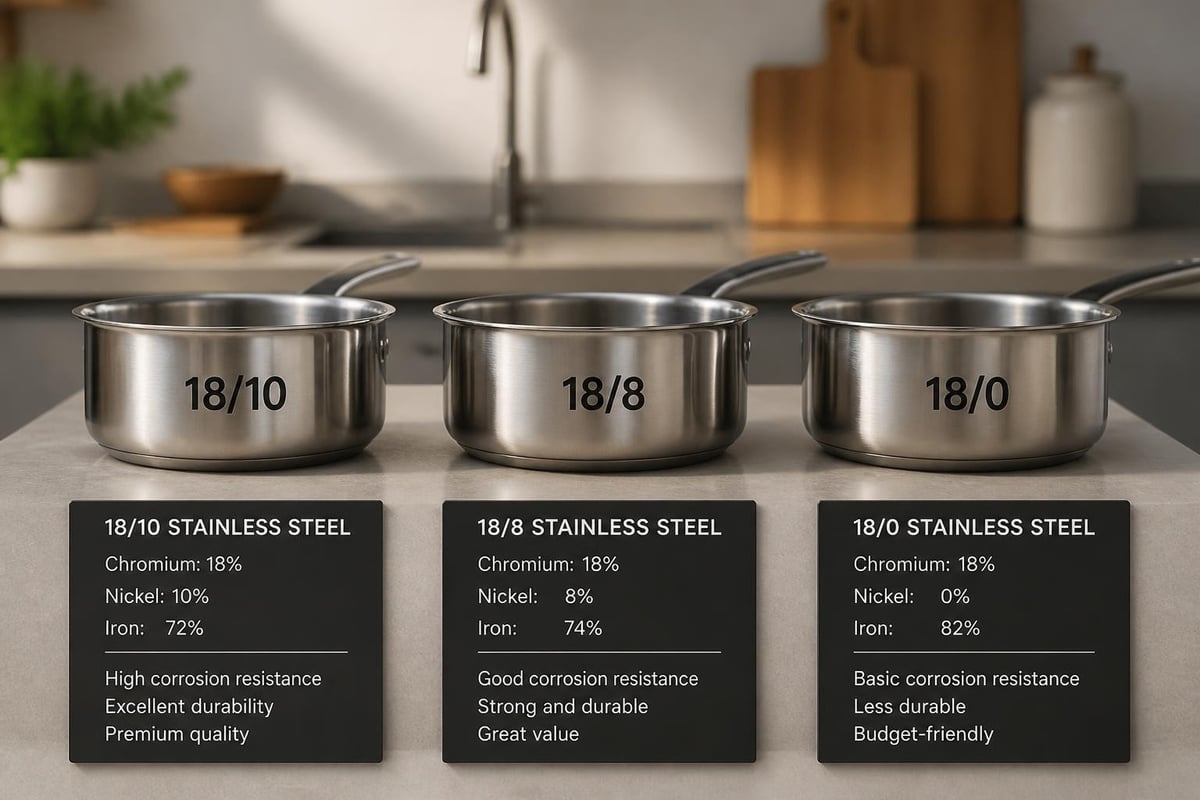
When shopping for cookware stainless steel, you'll encounter numerical designations like 18/10, 18/8, or 18/0. These numbers reveal the chromium and nickel content respectively.
18/10 stainless steel contains:
- 18% chromium for corrosion resistance
- 10% nickel for durability and shine
- The balance is primarily iron with trace elements
18/8 stainless steel offers:
- 18% chromium
- 8% nickel
- Slightly lower nickel content but still excellent performance
18/0 stainless steel features:
- 18% chromium
- 0% nickel (magnetic, induction-compatible)
- More affordable but may lack the same luster
The most common food-grade designation is 304 stainless steel (18/8 or 18/10), which balances corrosion resistance with cost-effectiveness. Premium cookware stainless steel often uses 316 grade, which adds molybdenum for enhanced resistance to salt and acidic foods.
Construction Methods That Matter
Not all cookware stainless steel performs equally. The construction method dramatically affects heat distribution, durability, and cooking results.
Single-Ply vs. Multi-Ply Construction
Single-ply cookware uses one layer of stainless steel. While affordable, it suffers from poor heat distribution and hot spots that can burn food.
| Construction Type | Layers | Heat Distribution | Price Point | Best For |
|---|---|---|---|---|
| Single-ply | 1 | Poor | Budget | Boiling water only |
| Tri-ply | 3 | Excellent | Mid-range | Daily cooking |
| 5-ply | 5 | Superior | Premium | Professional use |
| 7-ply | 7 | Exceptional | Luxury | Serious enthusiasts |
Tri-ply construction represents the sweet spot for most home cooks. This design sandwiches an aluminum or copper core between two layers of stainless steel, combining the heat conductivity of aluminum with the durability and safety of stainless surfaces.
Five-ply and seven-ply options add additional layers for even better heat distribution. According to Consumer Reports testing, these premium constructions excel in tasks requiring precise temperature control like searing proteins or making delicate sauces.
Clad vs. Disc-Bottom Construction
Fully-clad cookware extends the multi-layer construction from the base up through the sidewalls. This ensures even heating across the entire cooking surface.
Disc-bottom (encapsulated base) cookware attaches a multi-layer disc only to the bottom. While more affordable, this design can create temperature variations between the base and walls, making it less ideal for tasks like sautéing or reducing sauces.
Safety Considerations and Metal Leaching
Modern cookware stainless steel is generally recognized as one of the safest cooking surfaces available. However, understanding the conditions that affect metal leaching helps you use your cookware optimally.
What Research Reveals
Research published in peer-reviewed journals has examined nickel and chromium migration from stainless steel during cooking. The studies found that several factors influence leaching:
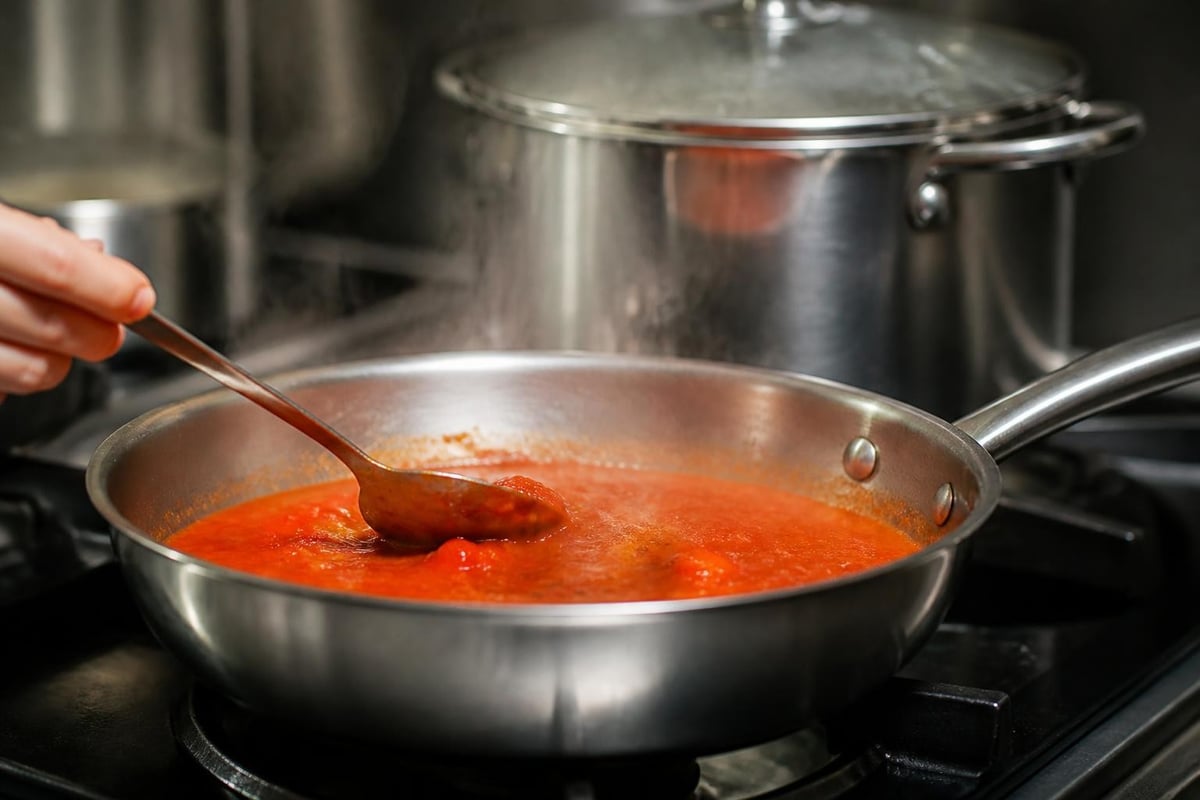
- Food acidity: Tomato sauce, vinegar, and citrus increase metal migration
- Cooking duration: Longer cooking times allow more leaching
- Temperature: Higher heat accelerates the process
- Surface condition: Scratches and damage increase metal release
- Cookware age: New pans leach more initially, then stabilize
The good news? Even under worst-case scenarios, the amounts detected remain well below safety thresholds for most individuals. A 2023 comprehensive review concluded that stainless steel cookware poses minimal health risks when used properly.
Special Considerations for Nickel Sensitivity
Approximately 10-15% of the population has nickel sensitivity. For these individuals, cookware stainless steel with lower nickel content (18/0) or alternative materials may be preferable.
Tips for minimizing exposure:
- Season new pans by boiling water three times before first use
- Avoid cooking highly acidic foods for extended periods in stainless steel
- Use wooden or silicone utensils to prevent surface scratching
- Replace cookware with visible damage or pitting
- Consider 18/0 stainless steel if you have known nickel allergy
Performance Characteristics and Cooking Benefits
Cookware stainless steel excels in specific cooking applications while presenting challenges in others. Understanding these characteristics helps you maximize performance.
Where Stainless Steel Shines
Searing and browning: The non-reactive surface allows proteins to develop proper fond (brown bits) that create rich flavors. Unlike nonstick coatings, stainless steel tolerates the high heat necessary for perfect crusts.
Deglazing and sauce-making: Those flavorful brown bits dissolve beautifully with wine, stock, or other liquids, creating restaurant-quality pan sauces impossible to achieve with coated cookware.
Acidic foods: Tomatoes, wine reductions, citrus-based dishes, and vinegar preparations won't react with the stable stainless surface, preventing metallic flavors.
Oven compatibility: Most cookware stainless steel handles oven temperatures up to 500°F or higher (check manufacturer specifications), enabling techniques like starting proteins on the stovetop and finishing in the oven.
Durability: Stainless steel withstands metal utensils, dishwasher cycles, and decades of use without degrading.
Challenges to Navigate
Stainless steel requires technique to prevent sticking. The material itself is not naturally nonstick, so proper preheating and fat usage are essential.
The preheat test: Heat your pan over medium heat for 2-3 minutes. Flick a few drops of water onto the surface. If they form a ball and roll around (the Leidenfrost effect), your pan is ready. Add fat, let it heat until shimmering, then add food.
Food release timing: Proteins naturally release from stainless steel once properly seared. Resist the urge to move or flip food prematurely. When ready, it will release cleanly.
Selecting the Right Pieces for Your Kitchen
Building a cookware stainless steel collection doesn't require buying complete sets. Strategic piece selection often delivers better value and performance.
Essential Starter Pieces
10-inch or 12-inch skillet: The workhorse of any kitchen handles sautéing, searing, pan-frying, and sauce-making. Look for sloped sides that facilitate tossing and a helper handle if choosing 12-inch.
3-quart or 4-quart saucepan: Perfect for grains, vegetables, small-batch sauces, and reheating. A pouring lip adds functionality.
8-quart stockpot: Handles pasta, stocks, soups, and batch cooking. Tri-ply construction matters less here since you're typically boiling liquids.
Features Worth Prioritizing
- Riveted handles: More durable than welded alternatives
- Flared rims: Facilitate drip-free pouring
- Tight-fitting lids: Improve moisture retention and heat efficiency
- Flat bottoms: Ensure even contact with heat sources
- Oven-safe construction: Enables stovetop-to-oven techniques
| Feature | Budget Option | Premium Option | Value Difference |
|---|---|---|---|
| Handle attachment | Welded | Riveted stainless | Longevity +5-10 years |
| Core material | Aluminum | Copper | Heat response +30% faster |
| Rim finish | Standard | Rolled/flared | Pouring precision |
| Lid construction | Single-ply | Multi-ply | Heat retention +20% |
Maintenance and Care Strategies
Proper maintenance keeps cookware stainless steel performing and looking exceptional for decades.
Daily Cleaning Best Practices
- Cool before washing: Thermal shock from cold water on hot pans can cause warping
- Hand washing preferred: Although dishwasher-safe, hand washing preserves appearance
- Use appropriate cleaners: Dish soap and warm water handle routine cleaning
- Dry immediately: Prevents water spots and maintains shine
Addressing Common Issues
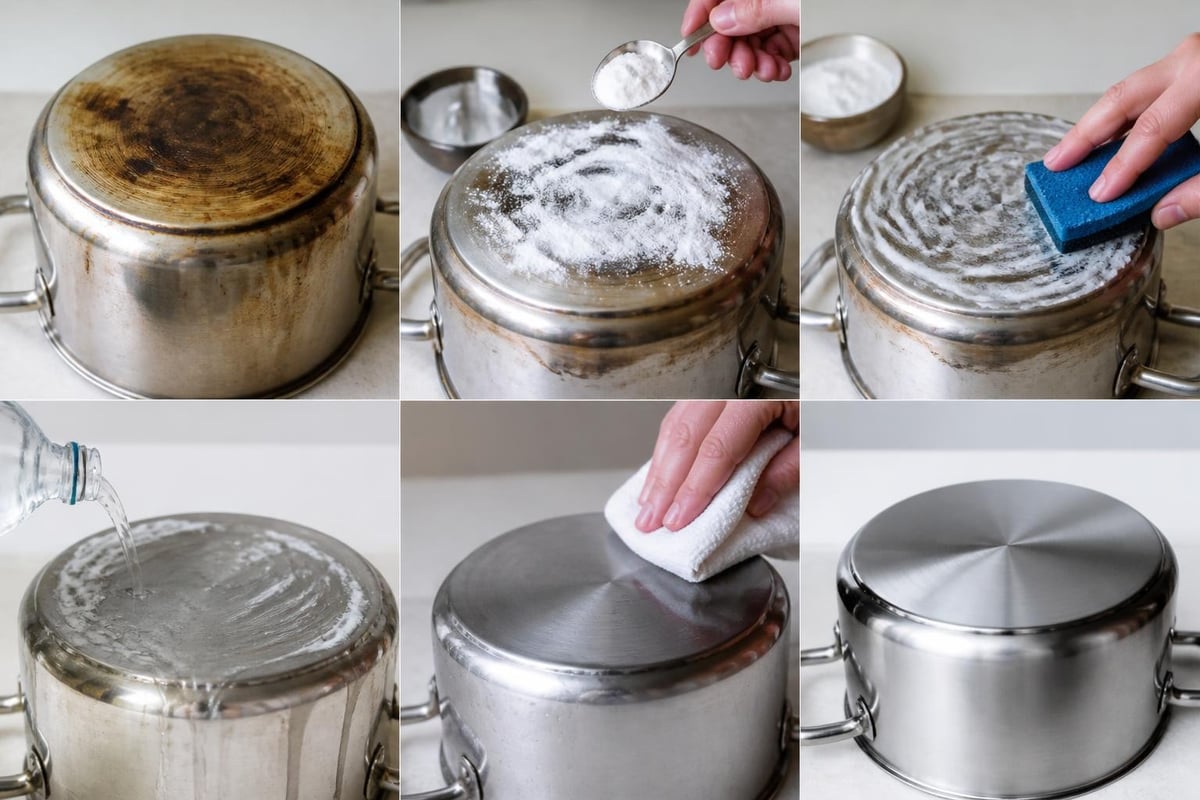
Stuck-on food: Create a paste from baking soda and water. Apply to affected areas, let sit 15-20 minutes, then scrub with a non-abrasive sponge.
Discoloration and rainbow stains: These heat tints are harmless. Remove with Bar Keeper's Friend or white vinegar. Apply the cleaner, let sit briefly, then scrub and rinse.
Calcium deposits: Hard water leaves white, cloudy film. Boil a solution of one part vinegar to three parts water in the affected pan for 5-10 minutes.
Scratches: Minor scratches are cosmetic and don't affect performance or safety. Deep scratches or pitting indicate it's time to replace the piece.
Comparing Stainless Steel to Other Materials
Understanding how cookware stainless steel stacks up against alternatives helps you make informed decisions.
Stainless Steel vs. Nonstick
Nonstick advantages: Nothing sticks, minimal fat needed, easy cleanup
Nonstick limitations: Can't achieve high-heat sears, coatings degrade over time, limited oven safety, metal utensils prohibited
Stainless steel advantages: Extreme durability, unlimited oven use, develops fond for sauces, tolerates metal utensils, no coating concerns
Stainless steel limitations: Requires proper technique to prevent sticking, more intensive cleaning
Stainless Steel vs. Cast Iron
Cast iron offers superior heat retention and natural nonstick properties when seasoned. However, it's significantly heavier, reactive with acidic foods, and requires ongoing seasoning maintenance. Cookware stainless steel provides more versatility with less maintenance, making it preferable for acidic dishes and everyday cooking.
Stainless Steel vs. Ceramic
Ceramic cookware appeals to those seeking naturally nonstick, non-metal surfaces. Yet ceramic coatings chip and degrade more quickly than stainless steel, especially when exposed to thermal shock or metal utensils. For longevity and performance consistency, stainless steel wins decisively.
Investment Value and Lifecycle Costs
Quality cookware stainless steel represents one of the best value propositions in kitchen equipment.
Price Ranges and What They Mean
- Budget tier ($50-$150 per piece): Usually disc-bottom construction, thinner gauge metal, basic finish quality
- Mid-range ($150-$400 per piece): Fully-clad tri-ply or 5-ply, excellent heat distribution, good handle construction
- Premium ($400-$800+ per piece): Copper core options, precision machining, superior fit and finish, often made in USA or Europe
Calculating True Cost Per Use
A $300 tri-ply skillet used three times weekly for 20 years costs just $0.14 per use. That same skillet would outlast approximately 15 budget nonstick pans over the same period, which would cost $450-$600 total with inferior performance.
According to food safety research, stainless steel's stability and resistance to degradation make it one of the lowest-risk cookware options long-term, adding health value beyond mere cost calculations.
Recognizing Quality Before You Buy
Savvy shoppers can identify superior cookware stainless steel through careful inspection.
Physical Indicators of Quality
Heft and balance: Quality pieces feel substantial but balanced. Excessively heavy cookware tires arms during use; too light indicates thin, poor-performing metal.
Surface finish: Look for even, consistent polishing inside and out. Irregularities suggest lower quality control.
Handle ergonomics: Handles should feel comfortable and stay cool during stovetop cooking (check specifications for exact heat tolerance).
Lid fit: Lids should sit snugly without gaps. Steam vents allow pressure release without rattling.
Manufacturing Markers
- Country of origin: USA, France, Italy, and Germany traditionally indicate higher quality, though some Asian manufacturers now produce excellent products
- Warranty length: Lifetime warranties signal manufacturer confidence; short warranties raise red flags
- Brand reputation: Established cookware brands stake their reputation on quality
- Detailed specifications: Reputable manufacturers provide exact alloy grades, ply construction details, and performance data
Smart Buying Strategies
Maximizing value when purchasing cookware stainless steel requires strategic timing and research.
When to Buy Sets vs. Individual Pieces
Sets make sense when:
- Starting from zero or replacing everything
- Set discount exceeds 40% off individual prices
- Every included piece suits your cooking style
- Quality matches premium individual pieces
Open stock is better when:
- Replacing specific worn pieces
- Building gradually as budget allows
- Wanting different brands for different applications
- Set includes pieces you won't use
Timing Your Purchase
Major sales occur during:
- Holiday weekends (Memorial Day, July 4th, Labor Day): 30-50% discounts common
- Black Friday through Cyber Monday: Deepest discounts of the year
- January white sales: Excellent for cookware historically
- Wedding registry season (April-June): Promotional pricing appears
- End of year clearance (December): Floor model and discontinued line deals
Environmental and Sustainability Considerations
Cookware stainless steel offers environmental advantages that align with sustainable kitchen practices.
Longevity Reduces Waste
Unlike coated cookware requiring replacement every 3-5 years, quality stainless steel lasts decades or lifetimes. This longevity dramatically reduces manufacturing demand, shipping emissions, and landfill waste.
Recyclability
Stainless steel is 100% recyclable indefinitely without quality degradation. When cookware finally reaches end-of-life, recycling programs readily accept it for conversion into new products.
Production Considerations
Modern stainless steel production uses significant recycled content (25-60% depending on manufacturer), reducing virgin material demands. Leading cookware brands increasingly source from mills with renewable energy commitments.
Specialty Applications and Techniques
Advanced cooks extract maximum value from cookware stainless steel through specialized techniques.
Building Perfect Fond
The browned bits that stick to stainless steel aren't mistakes-they're concentrated flavor. When searing proteins, don't disturb the meat until it releases naturally. Those caramelized proteins and sugars dissolve during deglazing, creating sauce foundations impossible to replicate in nonstick pans.
Temperature Manipulation
Stainless steel's responsiveness to heat adjustments enables precise temperature control. Unlike cast iron, which retains heat stubbornly, stainless steel cools quickly when removed from heat or reduced in temperature, preventing overcooking delicate items.
Acidic Cooking
Tomato-based sauces, wine reductions, and vinegar preparations benefit from stainless steel's non-reactivity. The metal won't leach into food or create metallic flavors, ensuring pure taste profiles.
Quality cookware stainless steel forms the foundation of efficient, enjoyable cooking that lasts for generations. By understanding grades, construction methods, and proper techniques, you can select pieces that deliver professional results daily. Whether you're building your first kitchen or upgrading well-worn pieces, the right stainless steel cookware transforms everyday cooking into culinary achievement. Kitchenovaplus offers carefully curated stainless steel cookware selections to help you build a kitchen that performs brilliantly for years to come-explore our collection to find the perfect pieces for your cooking style.
Also in NewsWhether you're looking for practical advice

Professional Cookware: The Complete Guide for 2026

Enamel Cookware: Safety, Performance & Buying Guide

Jamie Oliver Cookware: Quality, Features & Value in 2026
Follow
Sign up to get the latest on sales, new releases and more …
© 2026 Kitchenovaplus.
Powered by Shopify


