
Chicken Kitchenware: Essential Tools for Safe Poultry Prep
Preparing chicken safely and efficiently requires more than just basic kitchen tools. The right chicken kitchenware makes the difference between a streamlined cooking experience and a potential food safety hazard. From dedicated cutting boards to specialized knives and cleaning tools, investing in proper equipment protects your family while making meal preparation faster and more enjoyable. Understanding which tools are essential, how to use them correctly, and why certain materials work better than others transforms your approach to poultry preparation.
Why Dedicated Chicken Kitchenware Matters
Cross-contamination remains one of the leading causes of foodborne illness in home kitchens. When you handle raw chicken, bacteria like Salmonella and Campylobacter can spread to surfaces, utensils, and other foods. Dedicated chicken kitchenware creates a barrier between raw poultry and ready-to-eat items.
The science backs this approach. Research published in peer-reviewed journals shows that cutting boards used for chicken require specific hygiene practices to prevent bacterial contamination. Having separate tools eliminates guesswork and reduces risk.
Building Your Foundation
Starting with the right pieces makes everything else easier:
- Color-coded cutting boards that you use exclusively for raw poultry
- Dedicated poultry shears for breaking down whole chickens
- Sharp boning knives designed for navigating joints and removing skin
- Stainless steel prep bowls for organizing cut pieces
- Silicone-tipped tongs that won't scratch non-stick surfaces
These fundamental items create a safe, efficient workspace. The investment pays dividends in both safety and convenience every time you cook.
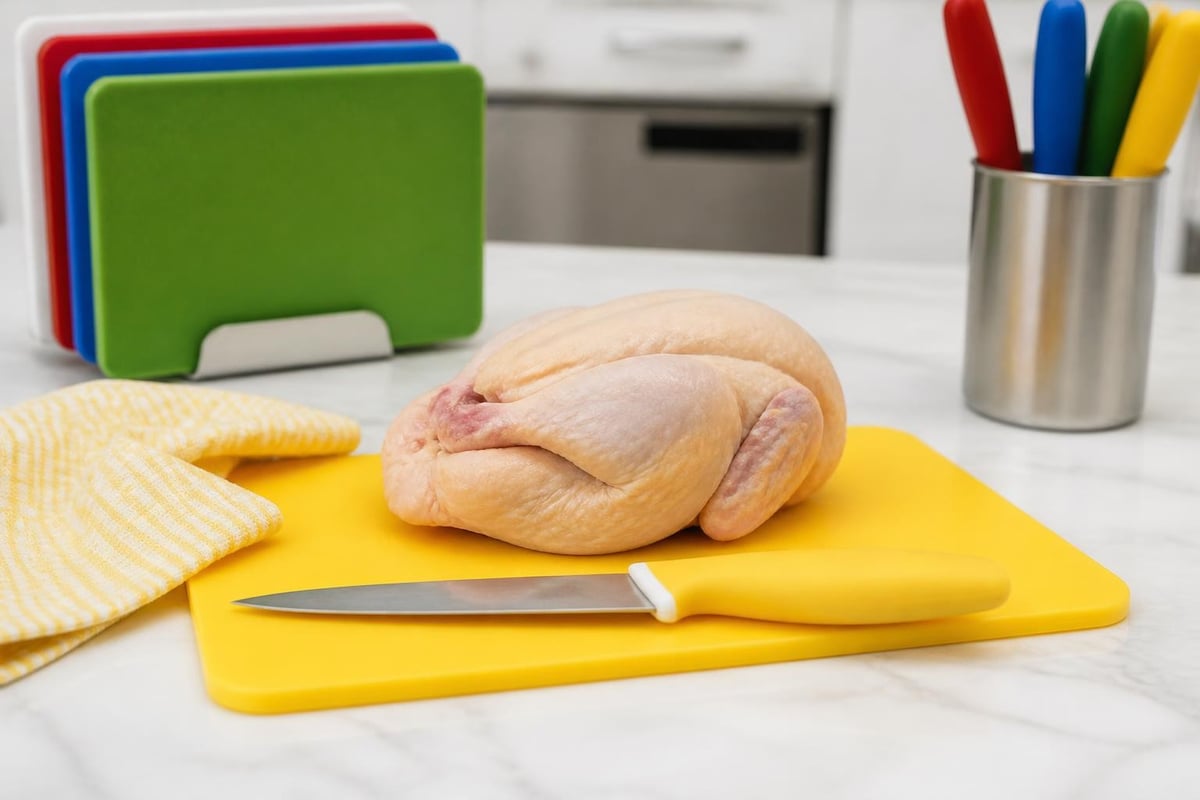
Cutting Boards: Your First Line of Defense
The cutting board you choose for chicken preparation affects both safety and longevity. This decision involves weighing material properties, maintenance requirements, and your personal cooking style.
Material Comparison
| Material | Pros | Cons | Best For |
|---|---|---|---|
| Plastic | Dishwasher-safe, inexpensive, easy to replace | Shows knife marks quickly, can harbor bacteria in grooves | High-volume chicken prep, frequent replacement cycle |
| Wood | Naturally antimicrobial, gentle on knives, durable | Requires hand-washing, needs regular oiling | Long-term use, careful maintenance routine |
| Bamboo | Eco-friendly, harder than wood, affordable | Can dull knives faster, may warp if not dried properly | Sustainable choice, moderate use |
| Glass | Non-porous, easy to clean, stain-resistant | Very hard on knife edges, can be slippery | Display or serving, not active cutting |
Consumer Reports provides detailed guidance on cutting board materials and their relative safety for poultry preparation. The key takeaway: both plastic and wood work well when properly maintained.
Size and Thickness Requirements
Your chicken kitchenware should include at least one large cutting board measuring 15 x 20 inches minimum. This size accommodates a whole chicken with room to maneuver your knife safely. Thickness matters too-boards at least three-quarters of an inch thick resist warping and provide stability during breakdown tasks.
Consider keeping multiple boards in rotation. While one goes through the dishwasher or drying process, another stands ready for your next meal prep session.
Knives and Cutting Tools for Poultry
The right blade makes chicken preparation safer and more precise. Dull knives require excessive pressure, increasing the risk of slips and uneven cuts. Sharp, purpose-built tools give you control.
Essential Blade Types
Boning knives feature thin, flexible blades that navigate around bones and joints. A 5 to 6-inch blade length offers versatility for most chickens. The flexibility allows you to follow the natural contours of the bird, maximizing meat yield while minimizing waste.
Poultry shears deserve a place in every chicken kitchenware collection. Heavy-duty spring-loaded shears cut through small bones and cartilage effortlessly. Look for models with:
- Stainless steel blades that resist corrosion
- Ergonomic handles with non-slip grips
- Separate locking mechanism for safe storage
- Removable pieces for thorough cleaning
Chef's knives between 8 and 10 inches handle the initial breakdown of whole chickens. While not specialized for poultry, a quality chef's knife offers the weight and edge needed for confident cuts through joints.
Maintenance and Storage
Sharp chicken kitchenware works better and lasts longer. Establish a routine:
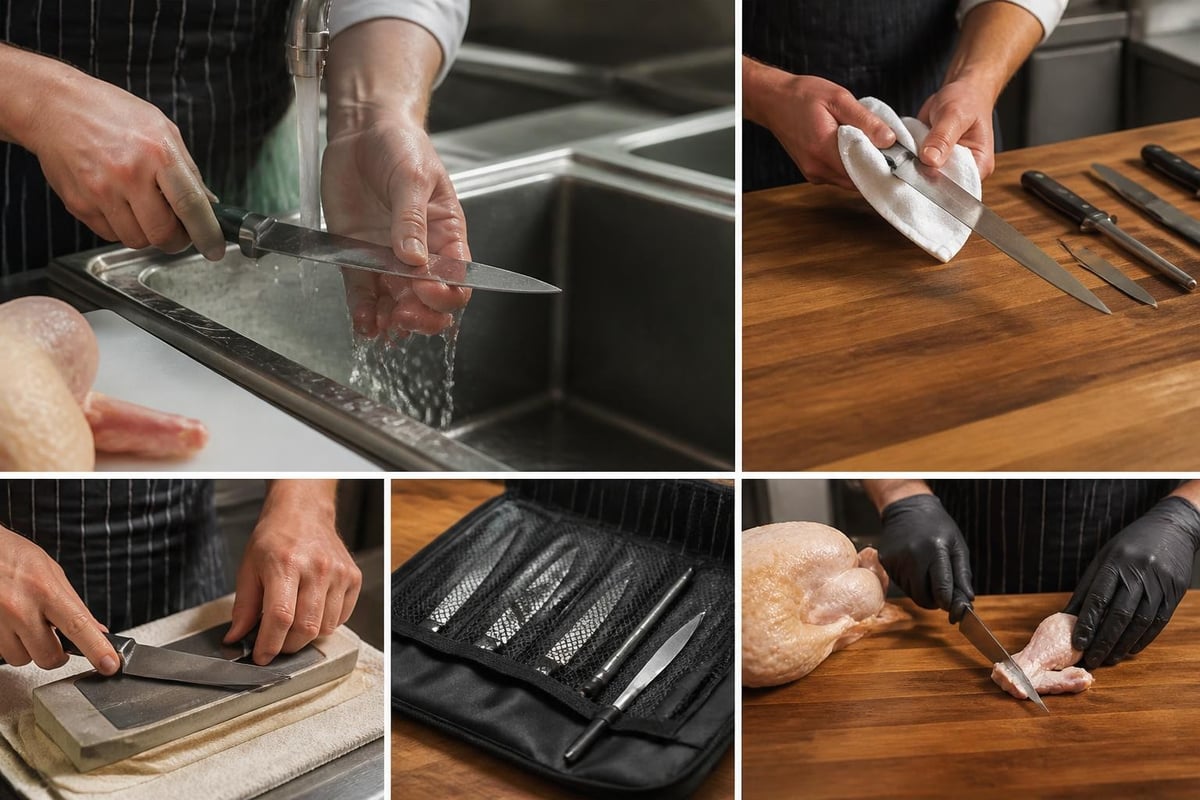
- Hand-wash knives immediately after use with hot, soapy water
- Dry completely before storing to prevent rust and bacterial growth
- Use a honing steel weekly to maintain the edge
- Professional sharpening annually for optimal performance
- Store in a knife block or on a magnetic strip, never loose in drawers
Preparation and Marinating Equipment
Once you've cut your chicken, proper marinating and seasoning equipment ensures even flavor distribution while maintaining food safety standards.
Non-Reactive Containers
Chicken kitchenware should include non-reactive bowls and containers for marinades. Acidic ingredients like lemon juice, vinegar, and wine react with certain metals, creating off-flavors and potential contamination.
Glass and ceramic containers work perfectly for marinating. They don't absorb odors, clean easily, and allow you to see the contents. Tempered glass models withstand temperature changes if you marinate in the refrigerator then bring to room temperature before cooking.
Food-grade plastic containers with tight-fitting lids offer lightweight portability. Choose BPA-free options with measurement marks molded into the sides. The best models feature textured bottoms that prevent sliding during mixing.
Stainless steel bowls provide durability and quick temperature adjustment. Nesting sets save storage space while giving you size options for different portion sizes.
Brining and Injection Tools
Brining bags designed for poultry accommodate whole birds while minimizing refrigerator space. Heavy-duty double-sealed bags prevent leaks that could contaminate other foods. Some models include built-in stands that keep the bag upright during the brining process.
Flavor injectors add moisture and seasoning deep into the meat. Professional-grade injectors feature:
- Stainless steel construction for easy cleaning
- Multiple needle sizes for different marinade viscosities
- Measurement markings on the barrel
- Replaceable needles and O-rings
Cooking and Serving Tools
The right chicken kitchenware extends beyond preparation into cooking and presentation. Specialized tools ensure even cooking and safe handling at high temperatures.
Heat-Resistant Utensils
Silicone basting brushes withstand temperatures up to 500°F while distributing glazes and butter evenly. Unlike natural bristle brushes, silicone doesn't trap bacteria and cleans thoroughly in the dishwasher. Look for one-piece construction without gaps where food particles can hide.
Long-handled tongs keep your hands away from heat sources. Spring-loaded models with scalloped edges grip securely without piercing the skin. A locking mechanism allows compact storage after use.
Instant-read thermometers remove guesswork from poultry cooking. Digital models display temperature in seconds, helping you achieve the USDA-recommended 165°F internal temperature without overcooking. Calibrate your thermometer regularly using ice water to ensure accuracy.
Roasting and Baking Equipment
Vertical roasters hold chickens upright, allowing heat to circulate evenly while fat drips away from the meat. Stainless steel versions last decades and work on both grills and in ovens. The even heat distribution produces crispy skin all around rather than just on top.
Roasting racks elevate chickens above pan drippings for better air circulation. V-shaped racks cradle the bird securely while adjustable models accommodate different sizes. Non-stick coatings simplify cleanup but require gentle handling to prevent scratching.
Cleaning and Sanitizing Your Chicken Kitchenware
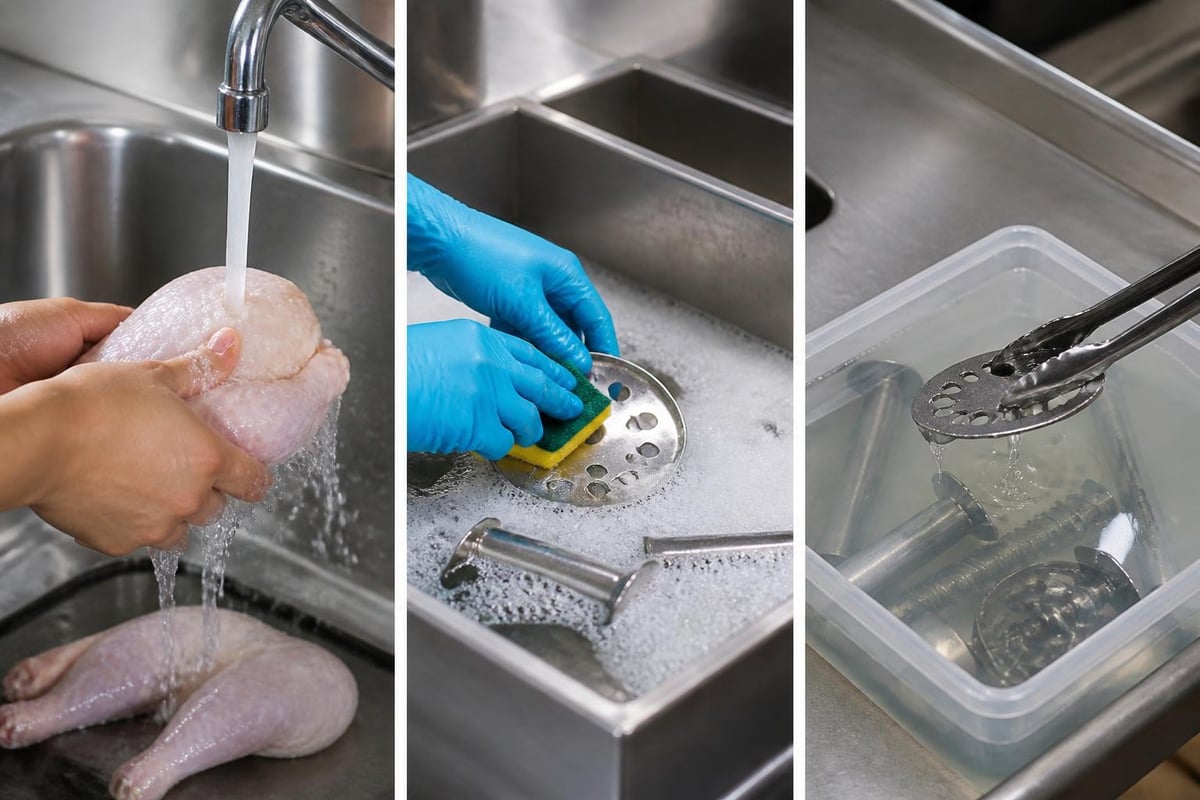
Proper cleaning protocols protect your household from foodborne illness. Purdue Extension recommends specific steps for cleaning and sanitizing chicken preparation tools to eliminate harmful bacteria.
The Three-Step Process
Step 1: Pre-rinse Remove visible debris under running water before applying cleaning products. This prevents organic matter from interfering with sanitizers.
Step 2: Wash thoroughly Use hot water and dish soap, scrubbing all surfaces including handles and joints. Pay special attention to textured areas where bacteria hide.
Step 3: Sanitize Apply a food-safe sanitizer or create a solution of one tablespoon bleach per gallon of water. Let items air dry rather than using towels that might reintroduce bacteria.
Dishwasher Considerations
Most modern chicken kitchenware tolerates dishwasher cleaning, but placement matters. Position items so water reaches all surfaces without pooling. The EPA provides guidance on measuring disinfectant residues which helps manufacturers develop safer cleaning products for kitchen tools.
Organization and Storage Solutions
Efficient storage keeps your chicken kitchenware accessible while preventing cross-contamination in cabinets and drawers.
Dedicated Storage Zones
Create a specific cabinet or drawer section for poultry tools. Color-coding extends beyond cutting boards-choose tools with matching colored handles that signal their dedicated use. This visual system helps everyone in your household maintain safe practices.
Drawer dividers keep knives separated and protected. Individual slots prevent blades from dulling against each other while making selection quick and easy. Spring-loaded dividers adjust to accommodate different handle sizes.
Wall-mounted systems maximize vertical space in smaller kitchens. Magnetic knife strips, pegboards with hooks, and rail systems keep frequently used chicken kitchenware within arm's reach. These open storage methods also ensure tools dry completely between uses.
Inventory Management
Track your chicken kitchenware condition and replacement needs:
- Replace plastic cutting boards showing deep knife grooves
- Retire knives with loose handles or pitted blades
- Discard silicone tools with tears or permanent stains
- Update thermometers that fail calibration tests
- Refresh sponges and brushes every two weeks
Regular assessment prevents compromised tools from undermining your food safety efforts.
Specialized Tools for Advanced Techniques
Beyond the basics, specialized chicken kitchenware opens new cooking possibilities.
Spatchcocking Equipment
Kitchen shears strong enough to cut through backbone enable spatchcocking-removing the spine so chickens lay flat. This technique reduces cooking time by 25% and promotes even browning. Heavy-duty shears with cushioned handles make the process comfortable even when working with larger birds.
Sous Vide Accessories
Vacuum sealing chicken with marinades intensifies flavor while sous vide cooking ensures precise temperature control. Food-grade vacuum bags designed for sous vide withstand extended water bath exposure without leaking. Reusable silicone bags offer an eco-friendly alternative for regular users.
Smoking and Grilling Aids
Beer can chicken roasters, cedar planks, and smoking chips expand your poultry repertoire. Stainless steel baskets hold wings and drumsticks securely on the grill while allowing smoke penetration from all sides.
Smart Features in Modern Chicken Kitchenware
Technology integration brings new capabilities to traditional tools. Digital meat thermometers with Bluetooth connectivity monitor internal temperature from your smartphone, alerting you when chicken reaches safe doneness. Some models track multiple probes simultaneously, perfect for cooking several pieces with different thicknesses.
UV sanitizing cases for cutting boards and knives eliminate 99.9% of bacteria between uses. These compact devices fit in standard cabinets and complete sanitizing cycles in minutes.
Self-sharpening knife blocks maintain blade edges automatically each time you insert or remove a knife. Built-in ceramic sharpeners work at the optimal angle for the specific blade, extending time between professional sharpenings.
Building Your Collection Strategically
Start with essential chicken kitchenware and expand based on your cooking frequency and style. A practical progression looks like this:
Month 1: Dedicated cutting board, quality chef's knife, instant-read thermometer Month 2: Poultry shears, stainless steel prep bowls, silicone basting brush Month 3: Boning knife, roasting rack, long-handled tongs Month 4: Vertical roaster, additional cutting boards, sanitizing supplies
This gradual approach spreads cost while giving you time to learn each tool thoroughly. Quality matters more than quantity-one excellent cutting board outperforms three mediocre options.
Safe, efficient chicken preparation depends on having the right tools maintained properly and used consistently. The chicken kitchenware you choose directly impacts both food safety and cooking results in your kitchen. When you're ready to upgrade your poultry preparation equipment with high-quality, durable tools designed for modern home cooks, Kitchenovaplus offers carefully curated selections that combine functionality with lasting value for every aspect of your chicken cooking needs.
Also in NewsWhether you're looking for practical advice

Professional Cookware: The Complete Guide for 2026

Enamel Cookware: Safety, Performance & Buying Guide

Jamie Oliver Cookware: Quality, Features & Value in 2026
Follow
Sign up to get the latest on sales, new releases and more …
© 2026 Kitchenovaplus.
Powered by Shopify


