
Chef Quality Cookware: Professional-Grade Kitchen Tools
Professional chefs rely on their tools to deliver consistent results under demanding conditions, and their cookware choices reflect years of industry experience and rigorous testing. Understanding what separates chef quality cookware from mass-market alternatives empowers home cooks to make informed investments that elevate their culinary capabilities. The right cookware doesn't just improve cooking performance; it transforms the entire kitchen experience through superior heat control, durability, and versatility that withstands daily professional use.
Understanding the Foundation of Professional Cookware
The term "professional-grade" gets thrown around liberally in kitchenware marketing, but true chef quality cookware meets specific performance standards that distinguish it from consumer products. Construction quality, material composition, and manufacturing precision create the foundation for cookware that performs reliably across diverse cooking techniques and heat sources.
Multi-Layer Construction and Heat Distribution
Premium cookware typically features multiple metal layers engineered to optimize thermal conductivity and heat retention. Tri-ply construction remains the industry standard, bonding stainless steel outer layers with an aluminum or copper core that distributes heat evenly across the cooking surface. This prevents hot spots that cause uneven cooking and burned food.
Five-ply and seven-ply designs extend these layers throughout the entire pan, including the sides, creating uniform heat distribution that rivals the performance of professional restaurant equipment. The manufacturing process matters enormously-inferior bonding can lead to layer separation over time, compromising performance and safety.
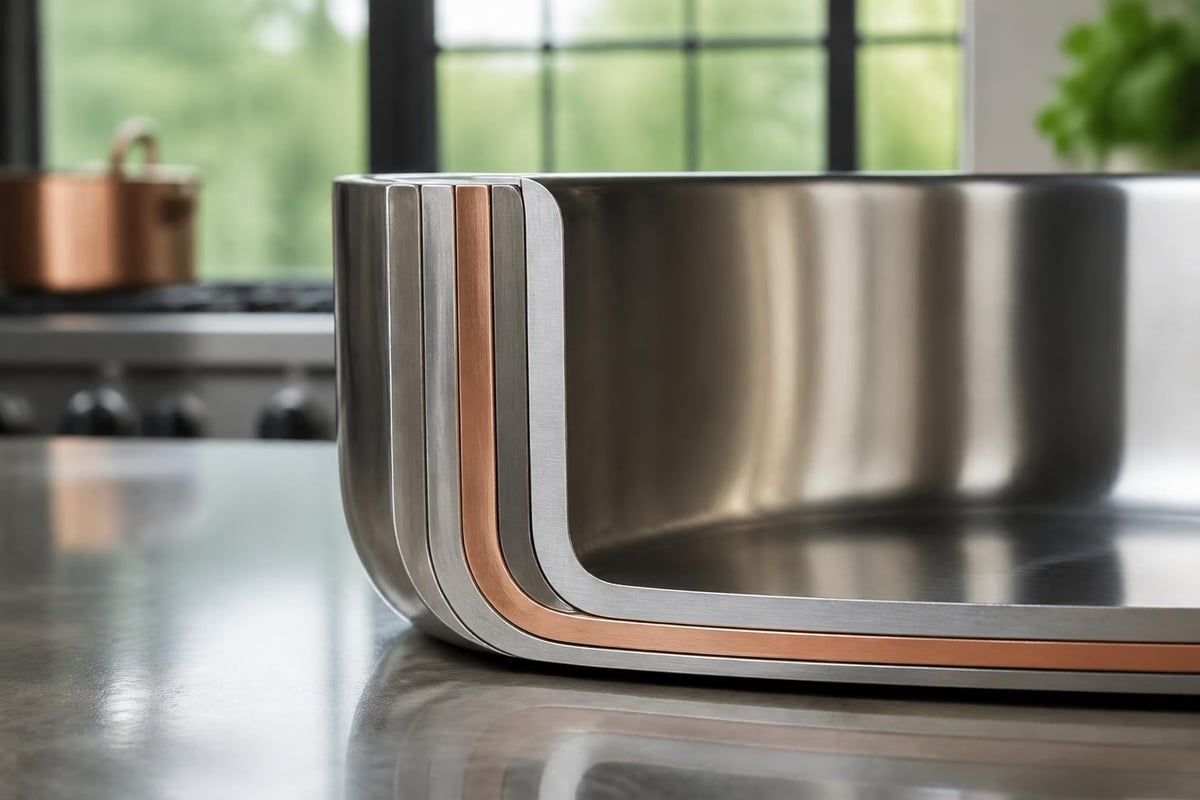
Key construction features to evaluate include:
- Full-clad versus disc-bottom design: Full-clad extends layers up the sides; disc-bottom places conductive metal only at the base
- Rivet construction: Secure, flush rivets prevent bacterial buildup and maintain structural integrity
- Rim design: Flared rims facilitate drip-free pouring and easy transfer of sauces
- Weight distribution: Balanced weight prevents tipping while remaining manageable for regular use
Material Science and Cooking Performance
Different base materials offer distinct advantages depending on cooking style and preferences. Stainless steel provides durability, non-reactivity with acidic foods, and ease of maintenance. Cast iron delivers exceptional heat retention ideal for searing and oven-to-table service. Copper offers unmatched thermal responsiveness for precise temperature control.
Understanding induction compatibility and electrical parameters has become increasingly important as induction cooking gains popularity. Chef quality cookware designed for induction must contain ferromagnetic materials that interact efficiently with electromagnetic fields, and recent research on all-metal induction cooking demonstrates how cookware composition affects energy efficiency and heating performance.
| Material | Heat Conductivity | Reactivity | Maintenance | Induction Compatible |
|---|---|---|---|---|
| Stainless Steel (18/10) | Moderate | Non-reactive | Low | Yes (with magnetic base) |
| Aluminum Core | Excellent | Reactive (when exposed) | Low | No (unless clad) |
| Copper | Superior | Reactive | High | No (unless clad with steel) |
| Cast Iron | Good retention | Reactive with acidic foods | Moderate to High | Yes |
| Carbon Steel | Very good | Reactive | Moderate | Yes |
The Health and Safety Dimension
Health considerations have moved to the forefront of cookware selection as consumers become more aware of potential chemical exposure from cooking surfaces. The nonstick cookware category has faced particular scrutiny regarding PFAS (per- and polyfluoroalkyl substances) and their potential health implications.
Navigating Nonstick Technologies
Traditional nonstick coatings containing PFOA have been largely phased out, but concerns about PFAS in everyday products remain valid. Professional kitchens increasingly opt for PFAS-free alternatives or avoid nonstick altogether, favoring properly seasoned carbon steel and cast iron for low-stick performance without chemical coatings.
When evaluating nonstick options, prioritize these factors:
- Ceramic-based coatings free from PTFE and PFOA
- Reinforced nonstick surfaces with titanium or diamond particle enhancement
- Temperature limitations clearly specified by manufacturers
- Coating durability backed by warranty coverage
The Consumer Reports guide on choosing healthier cookware provides comprehensive testing results and safety recommendations across various cookware categories, helping consumers make informed decisions based on material composition and manufacturing transparency.
Non-Reactive Surfaces for Versatile Cooking
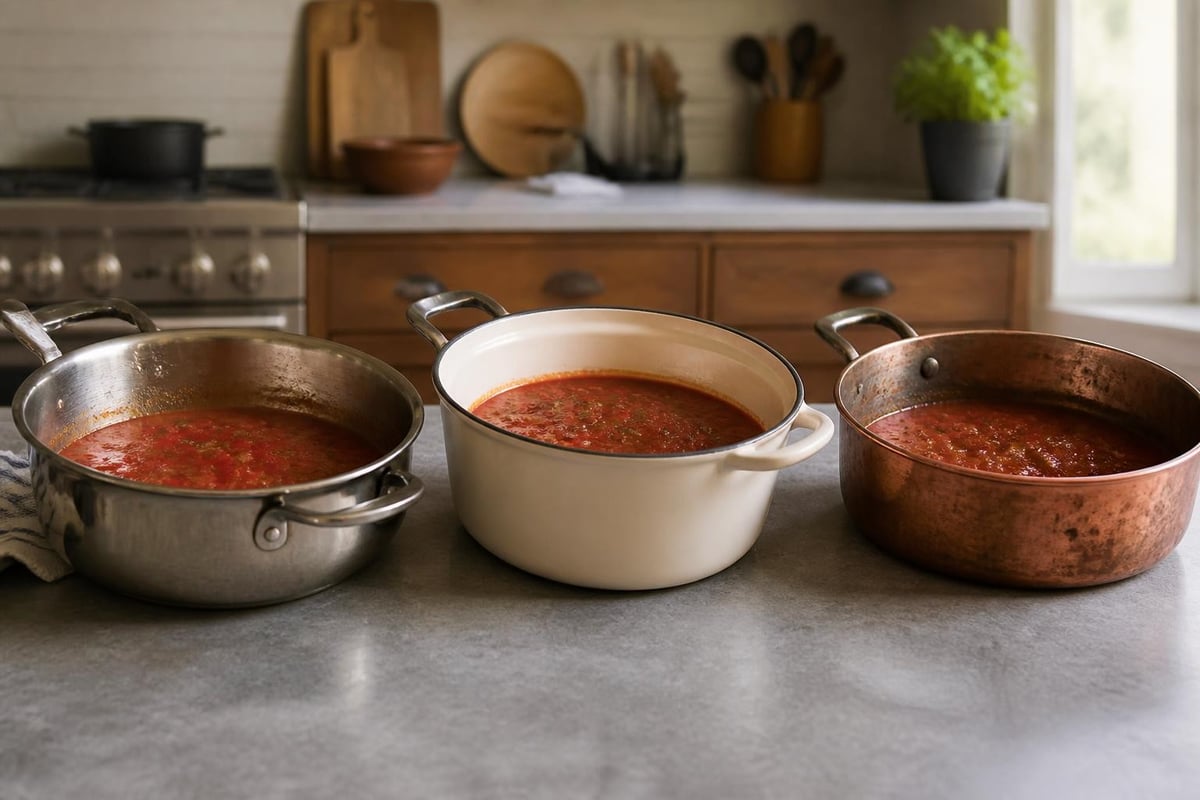
Chef quality cookware must handle acidic ingredients like tomatoes, wine, and citrus without leaching metallic flavors or harmful compounds. Stainless steel excels in this regard, maintaining flavor integrity across all ingredients. Enameled cast iron provides similar non-reactivity while adding the heat retention benefits of cast iron construction.
Professional cooks often maintain separate cookware sets optimized for specific tasks: stainless for sauces and braising, carbon steel for high-heat searing, and enameled cast iron for slow cooking and presentation.
Performance Features That Define Professional Standards
Beyond basic construction, several performance characteristics separate exceptional cookware from adequate alternatives. These features become especially important during extended cooking sessions or when preparing complex dishes requiring precise heat control.
Handle Engineering and Ergonomics
Professional-grade handles remain cool during stovetop cooking, provide secure grip even when wet, and withstand oven temperatures exceeding 500°F. Hollow stainless steel handles dissipate heat effectively while maintaining structural strength. Silicone or phenolic grips offer heat resistance but may limit oven use.
Handle attachment methods significantly impact longevity. Welded handles create seamless joints but may eventually weaken from thermal expansion cycles. Riveted handles distribute stress across multiple points, providing superior durability when properly engineered.
Consider these handle characteristics:
- Length and angle: Adequate distance from heat source with comfortable wrist position
- Grip texture: Secure hold without excessive pressure required
- Helper handles: Essential on larger pans (5-quart and above) for safe lifting when full
- Oven-safe rating: Clearly marked temperature limits for different handle materials
Lid Design and Vapor Management
Quality lids fit precisely to trap moisture and heat while providing visibility into cooking progress. Tempered glass lids withstand thermal shock and allow monitoring without removing the lid, preserving temperature stability. Stainless steel lids reflect heat back toward food and tolerate higher oven temperatures.
Self-basting lid designs with condensation rings return moisture to food, enhancing flavor development during braising and slow cooking. Steam vents prevent pressure buildup while maintaining optimal humidity levels inside the pan.
Selecting Cookware for Different Cooking Methods
Professional chefs build their cookware collection strategically, choosing pieces optimized for specific techniques rather than purchasing matching sets that include redundant or rarely used items.
Essential Professional Pieces
A functional professional kitchen requires fewer pieces than marketing suggests but demands higher quality in core items. The foundation includes:
- 10-inch or 12-inch skillet: Daily workhorse for sautéing, searing, and pan sauces
- 3-quart or 4-quart saucier: Rounded edges facilitate whisking and sauce preparation
- 8-quart stockpot: Soups, stocks, pasta, and batch cooking
- 5-quart or 7-quart Dutch oven: Braising, bread baking, and one-pot meals
- 8-inch skillet: Single servings and specialized tasks like toasting spices
Each piece should deliver specific performance advantages. Stockpots prioritize capacity and even heating across large volumes. Skillets need responsive temperature adjustment and excellent heat distribution. Dutch ovens require superior heat retention and oven-safe construction.
Specialty Applications and Advanced Techniques
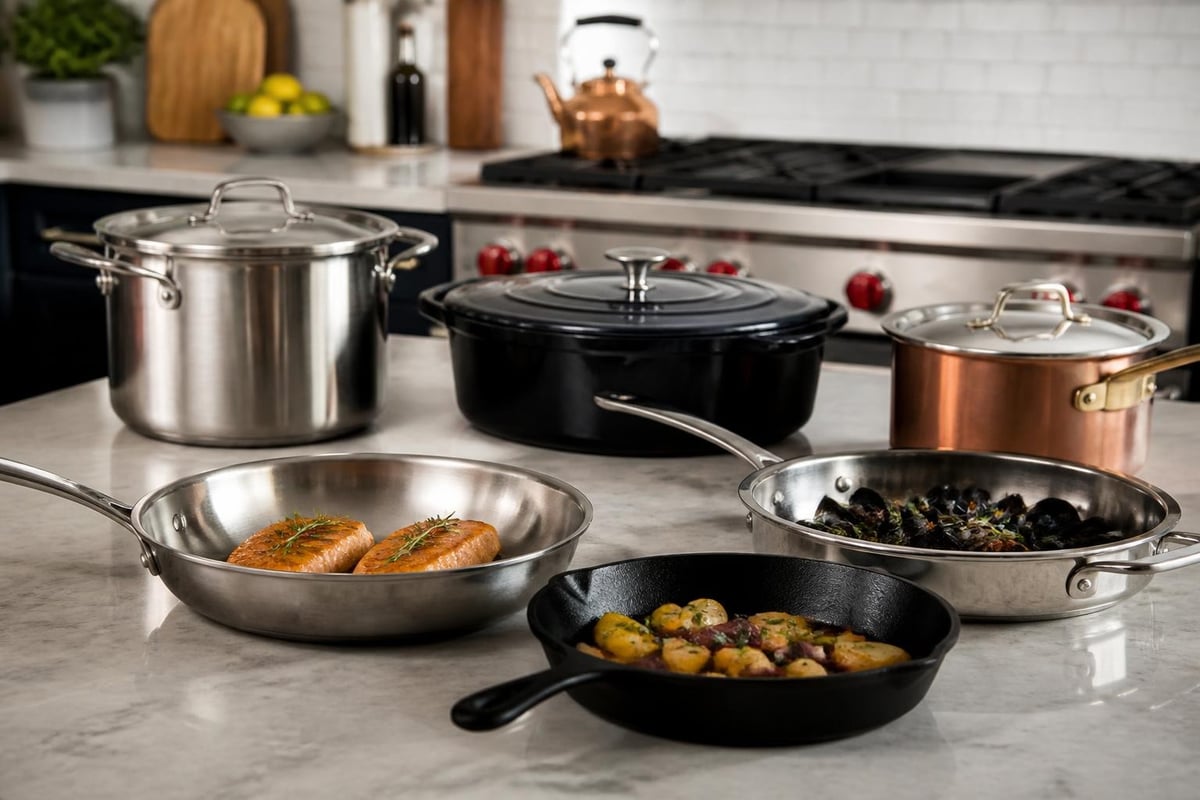
Professional-level cooking often demands specialized tools designed for specific culinary techniques. Copper saucepans provide the instant temperature response essential for delicate sauces and sugar work. Carbon steel woks deliver the intense, focused heat required for authentic stir-frying. Enameled cast iron braisers excel at low-and-slow cooking while transitioning beautifully from oven to table.
Investment in specialty pieces makes sense when technique demands outstrip the capabilities of general-purpose cookware. A serious baker benefits from heavy-gauge aluminum sheet pans. A home chef focused on Asian cuisine needs a properly constructed wok with appropriate heat retention characteristics.
Evaluating Manufacturing Quality and Brand Reputation
Not all cookware marketed as "professional" meets the performance standards expected in commercial kitchens. Distinguishing genuine quality from marketing claims requires understanding manufacturing indicators and brand track records.
Construction Quality Indicators
Examine these physical characteristics when evaluating cookware:
- Uniform thickness: Measure base thickness across the diameter; variations indicate poor quality control
- Smooth interior finish: Properly polished stainless steel or well-applied nonstick coating
- Precise lid fit: Minimal wobble with even contact around the rim
- Weight appropriate to size: Substantial without being unwieldy
- Clean welding or riveting: No sharp edges, gaps, or irregular joints
Warranty coverage provides insight into manufacturer confidence. Premium brands typically offer lifetime warranties on construction defects, while limited warranties of 1-3 years suggest lower quality expectations.
Brand Heritage and Professional Endorsement
Established cookware manufacturers with decades of history supplying commercial kitchens bring proven performance and reliability. Brands actively used in professional settings undergo real-world testing far more rigorous than home use, validating their durability claims.
Professional endorsements carry weight when they come from working chefs rather than paid celebrity spokespersons. Cookware regularly seen in restaurant kitchens, culinary schools, and professional competitions demonstrates genuine industry acceptance.
Investment Considerations and Long-Term Value
Chef quality cookware represents a significant financial commitment, but proper evaluation of cost-per-use over the product lifetime reveals the true value proposition. A $200 skillet used daily for twenty years costs pennies per use, while a $40 pan replaced every two years becomes more expensive long-term.
Price Versus Performance Analysis
Premium cookware pricing reflects:
- Superior raw materials: Higher-grade stainless steel, thicker copper cores, precision-ground bases
- Advanced manufacturing: Computer-controlled bonding, hand-finishing, rigorous quality testing
- Research and development: Continuous improvement in design, materials, and performance
- Warranty support: Lifetime coverage and responsive customer service
Budget alternatives often cut corners in material thickness, bonding quality, or finish precision. These compromises manifest as warping, hot spots, handle loosening, and coating degradation that appear within months or years of regular use.
| Price Range | Expected Quality | Typical Lifespan | Best For |
|---|---|---|---|
| $30-$75 | Entry consumer | 2-5 years | Occasional cooks, college students |
| $75-$150 | Better consumer | 5-10 years | Regular home cooking |
| $150-$300 | Professional entry | 10-20 years | Serious home cooks |
| $300+ | Premium professional | 20+ years (lifetime) | Daily intensive use |
Maintenance Requirements and Longevity
Chef quality cookware maintains performance over decades when properly cared for, but different materials demand specific maintenance approaches. Stainless steel tolerates dishwashers and metal utensils. Cast iron requires seasoning and hand washing. Copper needs periodic polishing to maintain appearance.
Understanding maintenance requirements before purchase prevents buyer's remorse. A beautiful copper saucepan loses appeal if the owner lacks time or interest for regular polishing. Similarly, cast iron may frustrate cooks unwilling to season and hand-dry after each use.
Proper care extends cookware life substantially:
- Avoid thermal shock: Never plunge hot pans into cold water
- Use appropriate utensils: Wood, silicone, or nylon protect cooking surfaces
- Store carefully: Prevent scratching with pan protectors or hanging storage
- Clean promptly: Remove food residue before it carbonizes
- Season as needed: Carbon steel and cast iron benefit from regular seasoning maintenance
Building a Coordinated Collection Strategically
Rather than purchasing complete sets, professional-level cooks build collections piece by piece, selecting each item based on actual cooking needs and performance requirements. This approach ensures every piece earns its storage space through regular use.
Prioritizing First Purchases
Begin with the most versatile, frequently used pieces before adding specialty items. A quality 10-inch or 12-inch skillet serves as the foundation for most cooking tasks. Follow with a saucepan sized to household needs (2-quart for singles or couples, 3-quart for families), then add a stockpot and Dutch oven as budget permits.
Assess actual cooking patterns before expanding. Cooks who rarely bake bread don't need a $300 enameled Dutch oven, regardless of its quality. Those who prepare stocks weekly benefit enormously from a professional-grade stockpot with superior heat distribution.
Mixing Materials for Optimal Performance
Professional kitchens rarely use single-material cookware sets. Instead, they select the ideal material for each application. Stainless steel for everyday versatility, cast iron for heat retention, carbon steel for high-heat applications, and copper for precision temperature control create a comprehensive toolkit addressing diverse culinary needs.
This mixed-material approach maximizes performance while controlling costs. Invest premium dollars in the pieces used daily while choosing mid-range options for occasional-use items. A professional-grade skillet and saucepan paired with consumer-grade specialty pieces creates a functional, budget-conscious collection.
The Commercial Kitchen Standard
Understanding what professional chefs demand from their cookware illuminates the features that matter most under real-world cooking conditions. Commercial kitchens operate at intensity levels that quickly expose weaknesses in construction, materials, or design.
Restaurant cookware must withstand:
- Continuous high-heat exposure: 8-12 hour shifts at elevated temperatures
- Rapid temperature cycling: Moving from refrigerator to high heat repeatedly
- Heavy use and abuse: Constant stirring, deglazing, and intensive cleaning
- Multiple users: Different techniques and handling across kitchen staff
- Commercial dishwashers: High-temperature, high-pressure cleaning cycles
Cookware that survives this environment delivers exceptional durability and performance for home use. The same construction quality that withstands commercial kitchen demands provides home cooks with cookware that performs flawlessly for decades.
Professional chefs prioritize function over appearance. Scratched, stained, or discolored cookware remains in service as long as it performs properly. This perspective helps home cooks focus on meaningful quality indicators rather than cosmetic perfection.
Investing in chef quality cookware transforms your cooking experience through superior performance, durability, and versatility that endures for decades. The right pieces elevate everyday meals and enable advanced techniques that would frustrate with inferior tools. Whether you're building a collection from scratch or upgrading key pieces, Kitchenovaplus offers carefully curated professional-grade cookware that meets the exacting standards of serious home cooks and culinary professionals alike, backed by expert guidance to help you select the perfect tools for your kitchen.
Also in NewsWhether you're looking for practical advice

Professional Cookware: The Complete Guide for 2026

Enamel Cookware: Safety, Performance & Buying Guide

Jamie Oliver Cookware: Quality, Features & Value in 2026
Follow
Sign up to get the latest on sales, new releases and more …
© 2026 Kitchenovaplus.
Powered by Shopify


