
Apartment Compost Bins Australia: Small Space Guide 2026
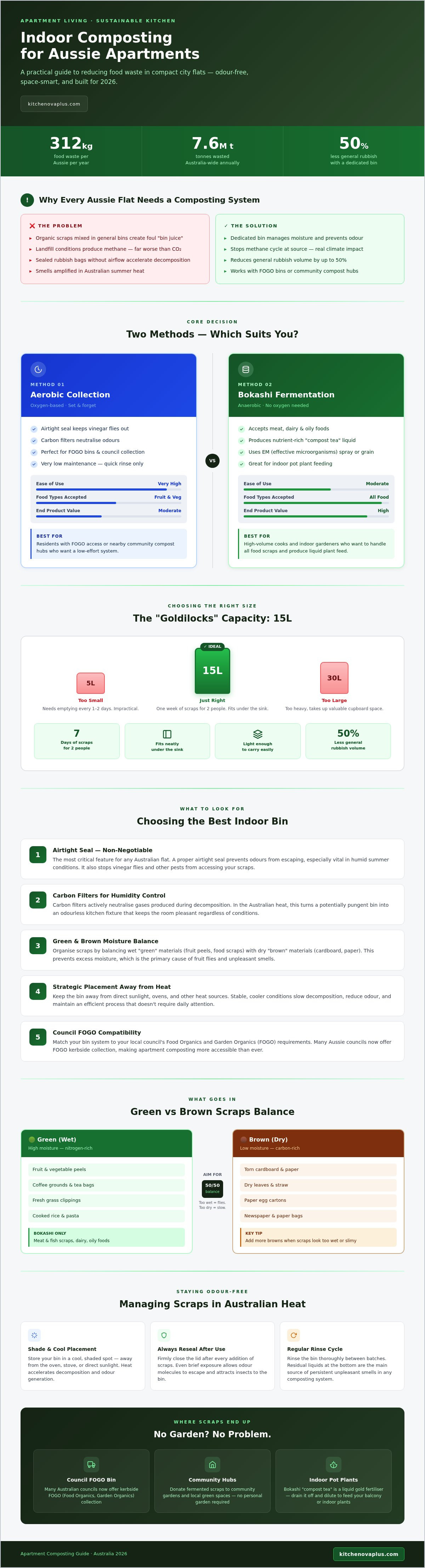
Did you know that the average Aussie tosses out about 312kg of food waste every single year? In a compact city flat, that volume of scraps usually ends up in the general rubbish; it creates a messy, smelly problem long before bin day arrives. You likely want to do your bit for the environment, but the fear of a pungent apartment composting bin Australia often holds you back. It is a common struggle to balance sustainable goals with the reality of limited benchtop real estate and modern kitchen decor.
You can actually transform your kitchen scraps into liquid gold without the smell, even in the smallest Australian flat. This guide simplifies the process for 2026, helping you find a clean, odourless system like a 15L indoor bin that fits your lifestyle. We will explore the practical differences between Bokashi and aerobic methods, and provide a clear roadmap to an efficient kitchen setup that reduces your waste footprint while keeping your home fresh and organised.
Key Takeaways
- Understand the functional differences between aerobic and anaerobic methods to choose a system that matches your local council's FOGO requirements.
- Prioritise an airtight seal when selecting your apartment composting bin Australia to ensure your kitchen stays odour-free even during a humid summer.
- Organise your scraps effectively by using a "green and brown" moisture balance to prevent common issues like fruit flies or excess dampness.
- Optimise your limited space by choosing a 15L capacity bin that offers enough room for family food waste while still fitting neatly under the sink.
- Learn the best strategic placement for your indoor bin to protect it from heat sources and maintain a stable, efficient decomposition process.
Why Every Aussie Apartment Needs a Dedicated Composting System
Apartment living often feels like a trade-off between location and lifestyle. Many Aussies assume that living in a sleek city flat means giving up on eco-friendly habits. However, a modern apartment composting bin Australia residents can use is specifically designed as a compact, odour-controlled tool for managing food scraps in tight spaces. It is not about keeping a messy heap on your balcony; it is about a sophisticated management system for your organic waste.
The environmental stakes are high for our country. Australia wastes approximately 7.6 million tonnes of food annually, and a significant portion of that comes from our homes. When organic matter is buried in landfill under layers of general rubbish, it lacks oxygen and produces methane. This gas is far more damaging to the atmosphere than carbon dioxide. If you are curious about the science and want to know what is composting exactly, it is the managed decomposition of organic materials into a nutrient-rich soil enhancer. By separating your scraps, you stop the methane cycle at the source.
The Problem with Traditional Rubbish Bins
Traditional bins are a recipe for disaster in a small kitchen. When you mix wet food scraps with plastic packaging, you create a sealed environment that lacks airflow. This leads to the familiar, foul-smelling "bin juice" that leaks into your primary waste container. It makes your entire kitchen smell like a tip within days, especially in the Aussie heat. Using a dedicated system allows you to manage moisture properly. You'll likely find your main rubbish volume drops by up to 50%. This means fewer late-night runs to the building's shared bin room and a much cleaner kitchen environment.
Space-Saving Benefits for Modern Kitchens
A streamlined kitchen is all about efficient workflow. A dedicated benchtop bin organises your food prep by giving you a specific place for peels and cores immediately. This prevents clutter from building up on your work surface while you cook. There is a deep psychological satisfaction that comes from a tidy, eco-friendly setup. It turns a daily chore into a sophisticated routine that reflects a modern, conscious lifestyle. You don't even need a garden to make this work. Many councils now offer FOGO services, and community hubs allow you to donate your fermented scraps to local green spaces. It's about working smarter, not harder, to keep your home fresh.
Understanding Indoor Composting Methods: Aerobic vs Anaerobic
Choosing the right method depends entirely on your lifestyle and what you plan to do with the end product. For many Australians living in high-rise buildings, the goal is simple waste reduction rather than full scale soil production. Understanding the difference between aerobic and anaerobic systems is vital for a successful kitchen setup. Both methods work well in small spaces, but they require different levels of interaction and produce different results.
A 15L capacity is often the "Goldilocks" size for an apartment composting bin Australia households find most effective. It provides enough room to hold a week's worth of scraps for a two person household without becoming too heavy to carry or taking up excessive cupboard space. This size balances the need for volume with the reality of limited benchtop real estate.
The Simple Collection Method (Aerobic)
This method is essentially a sophisticated collection system. It relies on oxygen to keep the process fresh while you wait to drop scraps at a community hub or place them in a council FOGO bin. High quality bins use airtight seals to prevent vinegar flies and other pests from finding your fruit peels. Some models also include carbon filters to neutralise gases; this ensures your kitchen remains pleasant regardless of the humidity. This is a "set and forget" style that is best for residents with access to green bins or local compost hubs.
The Fermentation Method (Bokashi)
Bokashi is an anaerobic process, which means it happens without oxygen. You layer food scraps with a spray or grain containing effective microorganisms (EM) and keep the lid tightly sealed. This system is a powerhouse for high volume cooks because it can handle meat, dairy, and oily foods that standard compost heaps cannot. A major perk for indoor gardeners is the "compost tea", which is a nutrient rich liquid you can drain off to feed your pot plants. If you are looking to streamline your kitchen waste, a 15L Indoor Kitchen Compost Bin offers a stylish and practical way to get started with this method.
Maintenance levels vary between these two paths. Aerobic collection is very low maintenance, requiring only a quick rinse between empties. Bokashi requires more regular attention, as you need to add bran with every layer and drain the liquid every few days. Whether you choose aerobic or anaerobic, the right apartment composting bin Australia offers will transform your daily routine into a more sustainable and organised experience.
How to Choose the Best Apartment Composting Bin for Your Kitchen
Selecting an apartment composting bin Australia residents can rely on involves more than picking a stylish container. In a confined space, your choice directly impacts your daily comfort and kitchen hygiene. The first priority must always be the seal. A standard bucket or open caddy will fail almost immediately in the Australian heat; it lets odours escape and invites vinegar flies to move in. An airtight lid is the only way to ensure your scraps remain a private matter rather than a building-wide scent.
Material choice also plays a significant role in long-term satisfaction. While ceramic looks elegant, it is often heavy and prone to chipping during frequent trips to the bin room. Stainless steel is durable, but it can show fingerprints and require constant polishing. High-quality, BPA-free plastics offer a practical middle ground because they are lightweight, easy to carry, and simple to sanitise. Smooth internal surfaces are non-negotiable; you don't want textured walls or sharp corners where food particles can hide and create bacterial growth.
Capacity vs Frequency of Emptying
Many beginners make the mistake of buying a tiny 3L caddy, only to find it overflows within 48 hours. If you follow a plant-heavy diet, your volume of peels and stalks will be high. A 15L capacity is generally superior for most Aussie households. It allows you to collect scraps for a full week without the constant need for emptying, yet it remains compact enough to fit inside a standard under-sink cupboard. Always check for a sturdy, reinforced carry handle. You'll appreciate the extra strength when you're navigating the lift or stairs to reach the communal FOGO bin with a full load.
Aesthetic and Design Integration
Your composting system shouldn't be something you feel the need to hide. Modern kitchen organisation is shifting from "hidden rubbish" to "proudly displayed sustainability tools." Choosing a colour and finish that complements your stone benchtops or matte cabinetry turns a waste system into a design feature. It reflects a lifestyle of conscious modernisation where every item has a purpose. KitchenovaPlus focuses on this exact "Plus" factor, ensuring that your 15L bin adds a touch of sophistication to your kitchen while performing its environmental duty with peak efficiency.
Odour-Free Composting: Managing Your Scraps in the Australian Heat
Managing an apartment composting bin Australia during a sweltering summer requires a proactive strategy. High humidity and temperatures exceeding 30 degrees Celsius accelerate natural decomposition, which can lead to unwanted scents if left unchecked. The most effective way to maintain a fresh kitchen is to manage the moisture levels within your bin. Balancing your "greens," such as fruit peels and coffee grounds, with "browns" like shredded egg cartons or plain cardboard is essential. These dry materials absorb excess liquid and prevent the anaerobic conditions that cause foul smells.
Strategic placement is another simple fix for heat-related issues. Keep your bin away from direct afternoon sun and heat-generating appliances like ovens or dishwashers. A cool, dark spot under the sink or in a pantry cupboard helps maintain a stable temperature. For particularly high-odour scraps like seafood shells or meat trimmings, use the "freezer hack." Store these items in a sealed container in your freezer until the day you plan to empty your main bin. This prevents them from breaking down in the heat and keeps your kitchen air perfectly clear.
Preventing Pests and Fruit Flies
Australian cockroaches and vinegar flies are notoriously persistent, especially when they detect fermenting fruit. A secure, well-fitted lid is your first line of defence against these uninvited guests. Vinegar flies are attracted to the gases released during decomposition, so a system that contains these scents is vital. An airtight seal serves as the primary physical barrier against pests. To simplify your summer waste management, consider the 15L Indoor Kitchen Compost Bin, which provides the robust seal and high capacity needed for a busy Aussie kitchen.
The 5-Minute Weekly Maintenance Routine
Keeping your system fresh does not require hours of work. Follow this brisk weekly routine to ensure 100% odour control and hygiene:
- Empty: Take your full bin to your nearest FOGO collection point or find a local host through the ShareWaste app.
- Rinse: Wash the interior with a simple solution of water and natural vinegar to neutralise any lingering acids.
- Dry and Re-line: Ensure the bin is completely dry before adding a fresh liner or a base layer of dry cardboard.
- Filter Check: If your model uses carbon filters, check them for dampness and replace them as per the manufacturer's guide to maintain peak performance.
Regular cleaning prevents the buildup of "bin juice" and keeps the internal surfaces smooth and sanitary. This methodical approach transforms composting from a messy chore into a streamlined part of your home organisation. By following these practical steps, you can enjoy the satisfaction of reducing your rubbish volume without compromising the peace and order of your modern apartment.
Modern Waste Solutions: The KitchenovaPlus 15L Indoor Bin
The KitchenovaPlus 15L Indoor Kitchen Compost Bin represents the next step in urban waste management. It offers a high-capacity solution that doesn't compromise your kitchen's aesthetic. Most apartment dwellers struggle with tiny caddies that overflow in a single day; this 15L system provides the ideal volume for busy households. It is large enough to handle a week of family food scraps, yet compact enough to slide neatly into a standard Australian under-sink cupboard. This balance is the key to a more streamlined and pleasant lifestyle.
Modernisation of the home starts with tools that actually work for your specific environment. This apartment composting bin Australia residents are choosing focuses on simplification; it turns a messy chore into a clean, predictable routine. You can finally stop worrying about the "bin juice" or the smell of decaying food in your main waste container. By using a system designed for the urban flat, you reclaim your kitchen space and your peace of mind.
Durability Meets Style
Working smarter in the kitchen means investing in items that are easy to maintain. The KitchenovaPlus bin is crafted from high-quality, BPA-free materials that feature smooth internal surfaces for effortless cleaning. You don't need to scrub at textured walls; a quick rinse with a natural solution keeps it fresh for years. Our design philosophy pairs a specific item with a descriptive outcome. The sleek, modern finish ensures your sustainability tools look like a deliberate part of your decor rather than a utility bucket. Customers often report that the transition to a zero-waste kitchen felt effortless once they had a bin that matched the quality of their other appliances.
Completing Your Sustainable Kitchen
True efficiency comes from a holistic approach to home organisation. You can pair your new composting system with other eco-essentials to further reduce your environmental footprint. Using food-grade beeswax bread bags and silicone bowl lids helps you eliminate single-use plastics while keeping your groceries fresher for longer. These small changes lead to significant long-term savings by reducing your reliance on expensive plastic bin liners and disposable wraps. It is about elevating your daily routine through thoughtful, high-quality choices.
We invite you to elevate your kitchen experience and solve the common friction point of food waste. Explore the full range of curated, stylish fixes at the KitchenovaPlus homepage. It is time to embrace a more organised and conscious way of living with tools that value both form and function. Start your journey toward a cleaner, more sustainable home today.
Elevate Your Urban Sustainable Lifestyle
Adopting a greener routine doesn't mean sacrificing the order or aesthetic of your modern kitchen. By choosing a high-capacity 15L system, you balance the practical need for volume with the spatial constraints of a city flat. Managing your apartment composting bin Australia effectively relies on a simple combination of moisture control and strategic placement to beat the heat. These small, purposeful adjustments significantly reduce your weekly rubbish volume while keeping your home smelling fresh and looking sophisticated.
Our solutions are specifically designed for Australian apartment living; they provide a seamless blend of form and function. You can enjoy the satisfaction of an odour-reducing design that is both easy to clean and stylish enough to display. If you're ready to simplify your chores and modernise your waste management, we invite you to Browse our 15L Indoor Kitchen Compost Bins. Taking this step toward a more conscious way of living has never been easier or more rewarding. You're well on your way to a more organised, eco-friendly home.
Frequently Asked Questions
Does an indoor compost bin really not smell?
Modern indoor bins are designed specifically to be odourless. A high-quality apartment composting bin Australia residents use relies on an airtight seal to trap gases inside. This prevents the natural decomposition process from affecting your kitchen's air quality. You should also ensure you maintain a good balance of dry materials like shredded paper to absorb excess moisture. Regular cleaning of the smooth internal surfaces will keep the unit smelling fresh for years.
What can I actually put in my apartment compost bin?
You can include most fruit and vegetable scraps, coffee grounds, loose leaf tea, and crushed eggshells. Avoid adding large amounts of citrus or onions if you plan to use the scraps for a worm farm later. It's best to exclude meat, dairy, and oily foods unless you are using a specialised fermentation system like Bokashi. Keeping your scraps varied ensures a more balanced end product for community gardens or council FOGO collection services.
How often should I empty a 15L kitchen compost bin?
A 15L capacity is designed to hold approximately one week's worth of scraps for a typical two-person Aussie household. This frequency is ideal because it allows you to manage your waste without the bin becoming too heavy or the contents breaking down too quickly in the heat. If you cook mostly plant-based meals, you might find you need to empty it every five days to maintain a streamlined kitchen workflow and perfect hygiene.
What do I do with the compost if I do not have a garden?
You don't need a backyard to participate in sustainable waste management. Most modern apartments have access to a communal FOGO (Food Organics and Garden Organics) bin provided by the local council. Alternatively, you can use apps like ShareWaste to find neighbours or community gardens who would love your nutrient-rich scraps for their own soil. This turns your kitchen waste into a valuable resource for your local green spaces without requiring any outdoor space of your own.
Can I put meat and dairy in my indoor bin?
Meat and dairy can only be processed in an anaerobic fermentation system, such as a Bokashi bin. If you are using a standard aerobic collection bin, these items will rot and create significant odours that attract pests. Most apartment dwellers find it easier to stick to plant-based scraps for their daily collection. This keeps the maintenance routine simple and ensures your indoor environment remains pleasant and odour-free throughout the entire week between empties.
How do I stop fruit flies from getting into my kitchen scraps?
The most effective way to prevent fruit flies is to use a bin with a robust, airtight seal. These pests are attracted to the fermentation gases of over-ripe fruit, so containing those scents is your primary defence. You should also rinse your scraps before adding them if they are particularly sugary and ensure the lid is always closed immediately after use. Keeping your benchtop clear of other ripening fruit will further reduce the chance of an infestation.
Do I need to use compostable liners with my bin?
Compostable liners are not strictly necessary, but they do make the emptying process much cleaner and faster. If you choose to use them, ensure they are certified home compostable (AS 5810) rather than just "biodegradable" to meet Australian standards. Many people prefer to simply line the bottom of their apartment composting bin Australia with a few sheets of old newspaper or a piece of cardboard. This absorbs moisture effectively and is a free, sustainable alternative.
Where is the best place to store my compost bin in a small flat?
The best storage spot is a cool, dry area away from direct sunlight and heat sources like your oven or dishwasher. Many residents prefer the convenience of an under-sink cupboard or a dedicated spot in the pantry to keep the benchtop clear. If you have a modern, stylish bin, it can sit directly on your work surface for easy access during food prep. Just ensure it stays out of the afternoon sun to prevent the contents from overheating.
Also in NewsWhether you're looking for practical advice

Professional Cookware: The Complete Guide for 2026

Enamel Cookware: Safety, Performance & Buying Guide

Jamie Oliver Cookware: Quality, Features & Value in 2026
Follow
Sign up to get the latest on sales, new releases and more …
© 2026 Kitchenovaplus.
Powered by Shopify


